We're an ecommerce marketing agency for DTC brands, Shopify stores, and multi-SKU online retailers. One team runs the storefront build, SEO, paid media, Klaviyo, and CRO. Every dollar of ad spend ties to contribution margin and repeat purchase rate.
Same rhythm on every brand. Audit before we spend a dollar. Position before we launch an asset. Build against the offer. Scale against orders placed and LTV, not blended ROAS.
DISCOVERYDiagnose the funnel
Site, Shopify, ad accounts, email flows, and post-purchase surveys. Channel-by-channel teardown against orders placed and LTV per cohort.
SIGN-OFF: 3 WINS READY TO APPLY
OFFERSharpen the offer
Nail the hero SKU mix, subscription posture, and target buyer. Every PDP, ad, and email built off one positioning brief.
SIGN-OFF: SKU MIX + OFFER LOCKED
BUILD + LAUNCHBuild the assets
Launch the storefront, PDPs, funnels, and Shopify-linked tracking inside a 4 to 10 week build. Weekly written notes, nothing stalled in draft.
SIGN-OFF: ASSETS LIVE, FULLY OWNED
ONGOING GROWTHCompound the growth
Compound paid, SEO, retention, and creator wins. Reviews on your tier's schedule, tied to orders placed and LTV per cohort.
SIGN-OFF: ORDERS + LTV TRACKING LIVE
Not every ecommerce agency reports the same things
Most DTC agencies report on blended ROAS and impressions. Wix templates report on nothing. Here is what actually shows up in your store data when we run the program.
WHAT YOU ACTUALLY GET
REDEFINE WEB
TYPICAL AGENCY
DIY
Reports on orders placed and contribution margin
NO
NO
One accountable team for SEO and ads
NO
NO
Integrates with Shopify, WooCommerce, BigCommerce, Klaviyo
NO
NO
Owned storefront source and ad accounts at handoff
NO
NO
Ecommerce content written by writers who cover DTC
SOMETIMES
NO
Category page and PDP schema plus feed hygiene
YES
NO
Named account lead from the Scale tier
YES
NO
Case studies
Real brands, real numbers
A sampling of recent engagements that match this work.
Drove sales for Boogie Board at a $31 cost per conversion, at scale.
Boogie Board, the brand behind the first reusable writing tablet, had loosely targeted Google Ads. Its landing pages undersold the product, and it had no follow-up for repeat buyers. We sharpened keyword targeting, added LinkedIn Ads, optimized landing pages and set up lead magnets and automated follow-ups. Conversion rates rose 11% and cost per conversion reached $31 across $650K in managed ad spend.
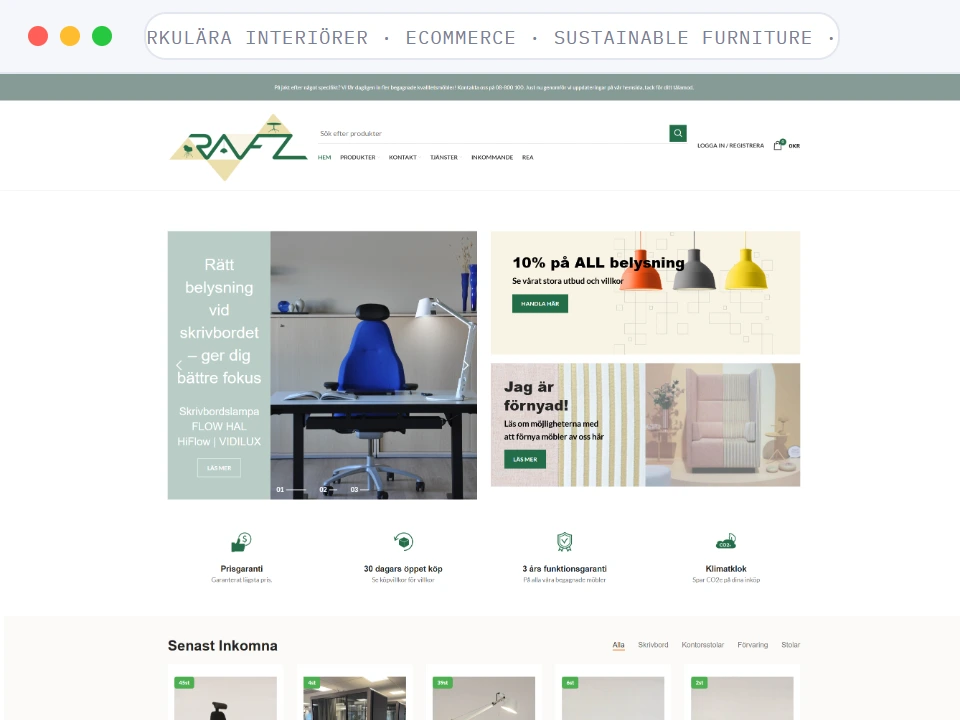
Ecommerce · Sustainable Furniture · Sweden•Web Development · WooCommerce Development · API Integration
Grew RAFZ conversions 28% with a rebuild that loads in 2 seconds.
RAFZ Cirkulära Interiörer sells eco-friendly furniture in Sweden. Its site was heavy with plugins and took 15+ seconds to load, and shoppers left their carts. We rebuilt it on a light custom theme, tuned WooCommerce, added the place2place API and a repaint feature, and refocused the homepage on products. The site now loads in 2 seconds, server requests fell 82% and conversions rose 28%.
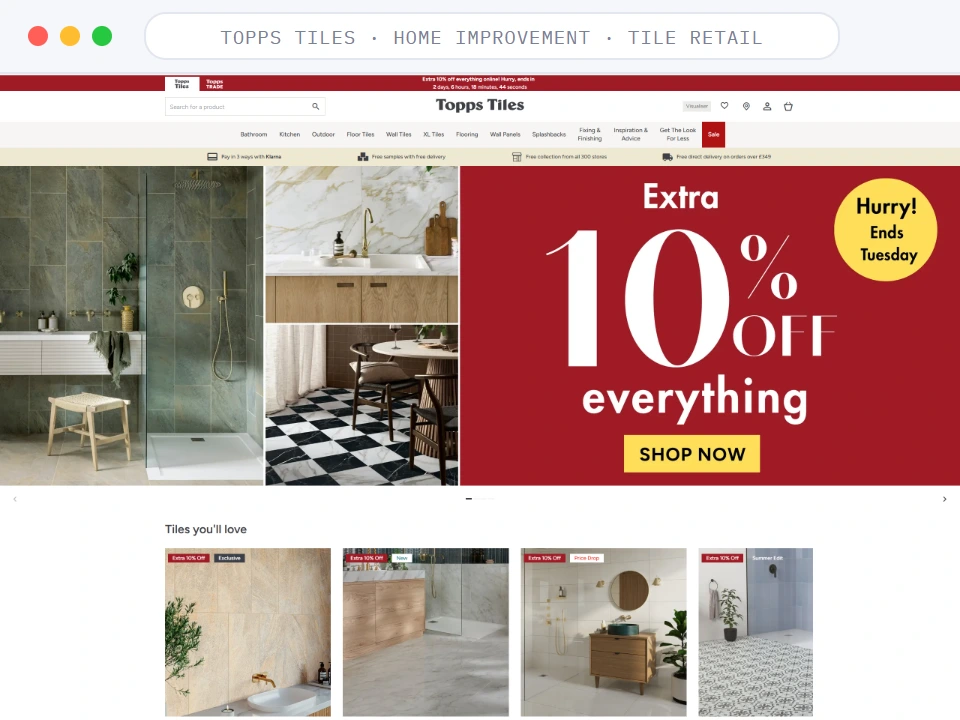
Home Improvement · Tile Retail•Paid Media Strategy · Campaign Innovation · Conversion Optimization
Innovative paid media drove 5,465 new visitors and 33% market share for the UK's number one tile specialist.
Topps Tiles, the UK's number one tile specialist, needed to hold its online sales as stores reopened. It also had to stop its paid channels cannibalizing each other. We ran a structured test-and-learn program with dynamic search feeds, inventory-led targeting and ROAS-aware budgets. The campaigns brought 5,465 new visitors and 1.3M extra impressions, lifted CTR 7% and won a 33.3% share of unique visitors.
An ecommerce marketing agency runs paid, organic, email, and SMS growth for online stores that sell direct to consumers. Scope covers Google Shopping and Meta media buying, ecommerce SEO on category and product pages, Klaviyo flows plus Attentive or Postscript SMS, and CRO on PDPs and checkout. A good ecommerce marketing agency reports to contribution margin and repeat purchase rate, not blended ROAS. On Shopify or Shopify Plus, that also covers Merchant Center feed hygiene, product review schema, and CAPI wiring so post iOS 14.5 attribution stays reliable. Redefine Web runs the full stack for DTC brands, with a dedicated lead from the Scale tier. Retainer plans start at $750/mo for a single pillar and scale from there. Ad spend is billed separately and goes to the ad platforms at cost. Customers see orders placed, contribution margin per channel, MER, and repeat purchase rate in a weekly report every Friday, on every tier. Full Shopify Help Center integration reference is available for teams onboarding a store from scratch or migrating from another platform.
What does ecommerce marketing do?
Ecommerce marketing turns paid, organic, email, and SMS channels into orders placed on your store. On Shopify or WooCommerce, that looks like Google Shopping and Meta ads tied to contribution margin, product and category SEO built for shopper intent, Klaviyo flows for abandonment and post-purchase, and Attentive or Postscript SMS for cart recovery. Every channel reports to orders placed and repeat rate, not click through rate. A retainer from $750/mo covers strategy, SEO and content, with media buying from the $1,250 Growth tier and a weekly report on every tier, so one team owns the growth stack. Customers convert faster when the offer, PDP, and post-purchase flow are aligned before ad spend ramps. Shoppers respond to matched creative between ad, PDP, and confirmation page, not disconnected campaigns. See the Shopify marketing playbook for baseline setup on channels, tracking, and email opt-in. Every launch pairs a hero SKU, an offer, and a 45-day post-purchase flow before creative testing begins so shoppers land on a store that reads consistently across every channel.
How much does ecommerce marketing cost?
Full service ecommerce marketing agency retainers run $3,000 to $10,000 a month for small and mid-sized DTC brands, per STRYDE 2025 pricing benchmarks. Enterprise programs run $15,000+/mo. Redefine Web starts at $500/mo for a single channel (SEO on Visibility or PPC on Launch), $750/mo for a Foundation retainer, and scales to $3,000+/mo for the full stack on Enterprise. Klaviyo flows are quoted separately, and landing page CRO tests start on Scale. Ad spend is billed separately and goes straight to the ad platforms. Most DTC brands allocate 7% to 12% of revenue to marketing including agency fees and paid media. Our first three tiers run a 6-month minimum term, and our Enterprise tier runs 12 months. Ecommerce marketing services with hidden fees or no clear exit clause are worth walking away from. Customers on the retainer see contribution margin in every weekly report, on every tier, so budget shifts happen fast. Shoppers acquired at a lower CAC compound repeat purchase rate faster, so the price paid on paid media matters as much as the retainer fee itself. Ask for margin-adjusted CAC before signing any ecommerce agreement. Every retainer includes a weekly performance report, strategy calls on the tier's schedule, and an LTV review against target CAC so pricing decisions stay measurable and honest.
What is a DTC agency?
A DTC agency runs growth for direct-to-consumer brands that sell on their own Shopify, WooCommerce, or BigCommerce storefront instead of through wholesale or big-box retail. Scope covers customer acquisition (Meta, Google, TikTok, YouTube), retention (Klaviyo, Attentive, Postscript), storefront CRO, creative production, and post-purchase upsells. A DTC marketing agency reports to contribution margin per order and LTV per cohort, not blended ROAS. On Shopify Plus, DTC agencies also handle Hydrogen headless builds, checkout extensions, and B2B channel splits. Redefine Web runs DTC and ecommerce retainers that report on orders placed, MER, and repeat purchase rate. Shoppers see the same offer voice across ads, email, and PDPs when one lead runs the program. Customers stay through the second and third purchase when the post-purchase flow includes a subscription or bundle tier that matches their first order. From the Scale tier, a named account lead runs the program, so shoppers see one consistent brand voice from search ad to unboxing card.
What is DTC in marketing?
DTC in marketing stands for direct to consumer. A DTC brand sells through its own storefront (Shopify, WooCommerce, BigCommerce, Magento) instead of going through wholesale, distributors, or big-box retailers. That means the brand owns customer data, checkout flow, post-purchase, and the full LTV loop. DTC marketing programs favor Meta, Google, and TikTok for acquisition, Klaviyo and Attentive for retention, and Shopify plus Hydrogen for storefront. Contribution margin per order is the metric that drives spend decisions. Amazon PPC counts as a marketplace channel and is often paired with DTC, but the DTC store is where owned customer data lives. Shoppers who buy direct from the brand generate first-party data the brand can use for retargeting and lookalike audiences. Customers on a DTC store also come with post-purchase, email, and SMS attribution that Amazon or big-box channels never surface. Read Klaviyo’s DTC playbook for retention benchmarks and flow templates. Programs report to first-party attribution wherever possible so shoppers stay tracked from paid touch through post-purchase without leaning on iOS 14.5 signals alone.
What are examples of DTC marketing?
DTC marketing examples cover the full acquisition and retention stack. Warby Parker built brand through Meta and out-of-home before opening physical stores. Casper scaled through podcast sponsorships plus paid social. Glossier grew on Instagram content and a referral program. Away runs Meta Advantage+ Shopping and Klaviyo browse-abandon flows at scale. A modern DTC ecommerce marketing agency runs 3 to 5 channels for shoppers: Google Shopping and Performance Max for high-intent search, Meta and TikTok for interest-based prospecting, Klaviyo email for retention, Attentive or Postscript for SMS, and paid influencer for creator volume. Post-purchase upsells, subscription tiers, and referral loops close the LTV gap. Customers who see a matched offer voice across ads, email, and PDP convert 2x faster in most programs. Shoppers who join a subscription tier or bundle in the first 45 days deliver 3x LTV over one-time buyers. Every DTC program should test at least one referral offer inside the post-purchase window.
What is the best way to promote my online store?
Promote an online store by matching 3 channels to your shopper: Google Shopping and Performance Max for high-intent search traffic, Meta and TikTok for interest-based prospecting, and Klaviyo email for retention. Add ecommerce SEO on category and product pages for compounding organic traffic that does not cost per click. Attentive or Postscript SMS captures abandoned carts. On Shopify, wire CAPI and Enhanced Conversions before scaling spend so attribution is not broken by iOS 14.5. Every store needs a hero SKU, a subscription or bundle offer, and post-purchase upsells before ad spend earns back. Customers who see a matched offer voice across ads, PDP, and confirmation convert 2x faster than benchmark. Shoppers with a clear price anchor and a shipping promise (free over $50, 2-day delivery) drop off carts less often. See Google Merchant Center Help for feed setup, product review schema, and Enhanced Conversions wiring. Every online store marketing plan starts with 90 days of paid testing plus a Klaviyo flow rebuild before adding SEO and CRO in month 3.
How do you market a Shopify store?
Wire Google Shopping and Performance Max first. Shopify’s product feed integrates natively with Merchant Center. Layer Meta Advantage+ Shopping campaigns for prospecting shoppers. Build 3 Klaviyo flows on day one: abandoned cart (3 emails over 48 hours), browse abandon, and post-purchase (30 to 60 day resend). Install Attentive or Postscript for SMS. Add product review schema and collection page copy for ecommerce SEO. Most Shopify stores under $1M ARR waste 40% of ad budget because attribution and flows are not set up before scaling paid spend. A proper Shopify marketing setup covers CAPI, Enhanced Conversions, feed hygiene, and 5 flows before the first dollar hits paid. Ecommerce marketing services on Shopify hit break-even fastest when the storefront, feed, and flows land before media buying starts. Customers acquired on a wired-up Shopify store cost 30% less to reach on retargeting. Shoppers see the same product data across search, ad, and PDP once feed and schema are aligned. A review on your tier's schedule covers flow revenue, feed health, and paid channel MER so nothing coasts between reviews.
Do you handle Klaviyo email flows and SMS for ecommerce?
Yes, quoted separately from the retainer tiers. We build and run Klaviyo flows for abandoned cart, browse abandon, post-purchase, win-back, and VIP segments. On the SMS side we set up Attentive or Postscript with double opt-in TCPA consent at checkout, then run campaign and flow SMS side-by-side with email. Every flow reports to revenue per recipient (RPR) and list value, not open rate. Typical uplift is 20% to 35% of store revenue attributed to owned channels within 90 days of a proper flow rebuild. Segmentation covers first-time buyers, VIPs, lapsed, and browsers with different offer voice per segment. Customers stay longer when the post-purchase sequence lands a subscription or bundle offer inside the first 45 days. Shoppers who join SMS convert 3x on flash offers over email-only shoppers, so both channels stay active. Reporting covers flow revenue, RPR by segment, and unsubscribe rate against sends. Every ecommerce program pairs email plus SMS with a segmentation strategy that respects unsubscribe risk and revenue per send. Shoppers who opt into both channels stay active 30% longer through the second-purchase window.
Do you work with Shopify Plus, WooCommerce, BigCommerce, and Magento?
Yes. We run Shopify and Shopify Plus, WooCommerce (WordPress), BigCommerce, and Magento (Adobe Commerce) programs. For headless stacks we build Shopify Hydrogen, Next.js storefronts, and BigCommerce headless. Klaviyo, Attentive, Postscript, ShipStation, Recharge, Yotpo, Judge.me, Loop Returns, and Gorgias integrations are scoped into your quote. Migrations between platforms (Magento to Shopify, WooCommerce to Shopify Plus) are a separate scope with SEO redirect maps included so ranking equity carries over. Shoppers stay engaged through a migration when 301 redirects, product schema, and Merchant Center feeds land on the same day. Customers on a fresh Shopify Plus build see hosting, checkout speed, and Klaviyo flow performance jump inside the first 30 days. Every platform choice is scored against your team’s tech skill, existing tool contracts, and target LTV, not agency preference. Refer to Shopify.dev for headless build requirements and app integration standards. Every platform build ships with a Klaviyo migration checklist and an app audit so shoppers see the same UX and email cadence pre and post-launch.
Do you report on ROAS or contribution margin?
Both, and contribution margin drives decisions. Blended ROAS hides the campaigns that move revenue after CAC, returns, refunds, shipping, and payment fees are subtracted. We pull COGS from Shopify or NetSuite, layer in fulfillment and return rates, and calculate contribution margin per order per channel for every report. Meta ROAS at 4x can lose money once return rates hit 22%. Contribution margin exposes the underperforming campaigns fast. Every report shows blended ROAS, MER, contribution margin per channel, orders placed, and repeat purchase rate. Customers reviewing the report know which campaign to cut and which to scale within an hour of receiving it. Ecommerce marketing services without margin visibility are guessing at spend allocation. Shoppers on the wrong campaigns cost more to retain and burn cash on first order. Reporting also covers new customer contribution margin against repeat customer contribution margin, so acquisition and retention budgets stay balanced by cohort maturity. Every quarterly review also compares net contribution margin per channel year over year so seasonality, promo depth, and shipping cost changes stay accounted for.
How long before ecommerce marketing shows results?
Paid channels (Google Shopping, Performance Max, Meta) show results in 2 to 4 weeks once tracking is wired properly. Klaviyo flow gains land inside 30 days once cart, browse, and post-purchase flows are live. Ecommerce SEO on category and product pages takes 3 to 6 months for measurable ranking movement and 6 to 12 months for compounding revenue. Amazon PPC ramps in 4 to 8 weeks. First contribution margin gains typically show from month 2. Shoppers responding to matched creative, offer, and PDP convert faster than benchmarks predict. Brands that run Klaviyo flows alongside the retainer see repeat purchase rate climb from month 3 as the flows compound with cohort maturity. The full ecommerce marketing services stack pays back through channel diversification: paid seeds volume, email compounds retention, SEO compounds acquisition, and CRO compounds average order value. Any channel run alone caps out inside 90 days without the others carrying weight. Shoppers acquired in month 1 typically hit their second purchase inside month 3 once Klaviyo flows and offers are aligned to cohort behavior.
Free · Written in 24 hours · No pitch
Get your free website audit.
A written report in your inbox within 24 hours, with three fixes you can ship the same week, whether or not you hire us.
Written in 24 hours · 10,000+ audits run · 300+ clients since 2021



 Published case study
 Published case study
 Published case study