Fixed price
$2,500
One-time project
Starter, up to 8 pages

Your café, boutique, contractor or clinic lives or dies on the local pack. Redefine Web builds small business web design for owner-operators. Google Business Profile connected, click-to-call above the fold, service area map baked in, flat-fee from $2,500.
Selected clients we've run full marketing programs for


If any of these looks familiar, the free website audit names the fix and what it's worth before you spend a dollar.
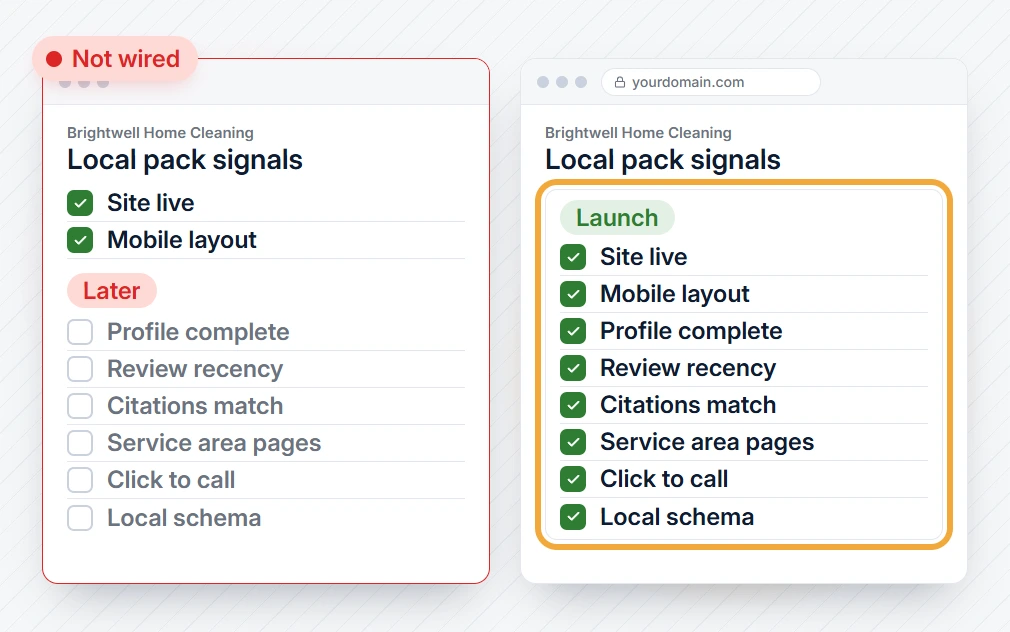
The local pack is not one thing. It is 40 signals covering Google Business Profile completeness, review count, review recency, citation consistency, on-page relevance, mobile speed, click-through rate, and proximity to the searcher. A web designer who wires 6 of them leaves the other 34 to a vendor you have not hired yet.
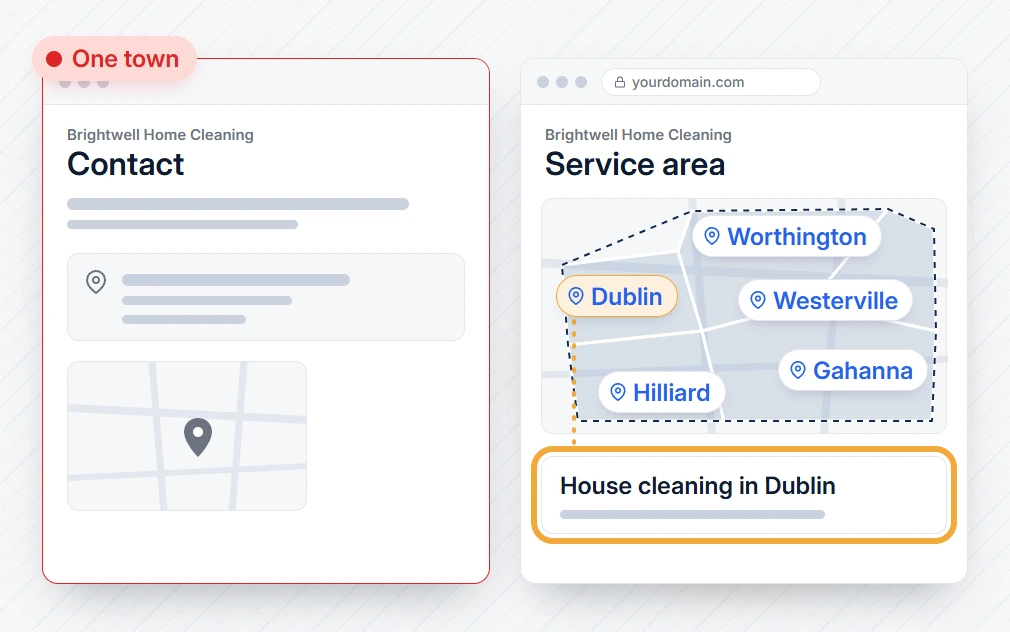
Most small business sites name one address and stop. If you serve 12 towns, Google only ranks you near the one you typed. Every build here ships a service area section on the home page, a city page for each serviceable zip up to your tier's page count, and internal links from each service page back to the location page.
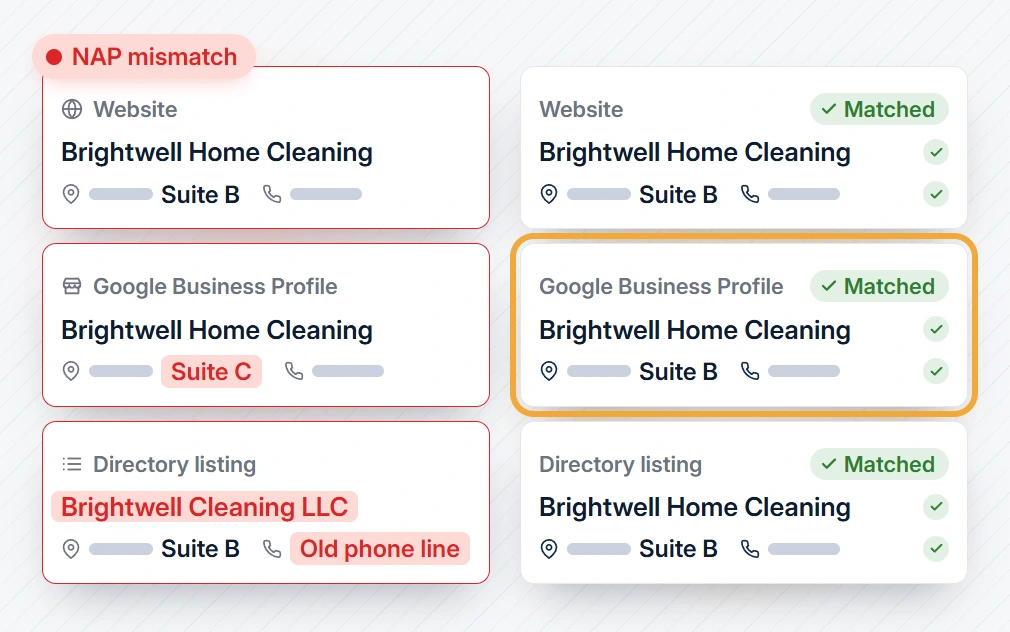
A suite number on the site, a different one on the profile, an old phone number on a directory, and the local pack reads three businesses instead of one. NAP is matched across the site and the Google Business Profile before launch, and across every citation source from Scale up. With 46% of Google searches carrying local intent, the cleanup is not cosmetic.
Three things every local build ships with, plus what Growth adds on top. Replacing a site you already have? See our small business website redesign service.
A click-to-call button locked above the fold on every page, and from Growth up, a Core Web Vitals speed budget that holds mobile LCP under 1.8s. Local phone number stays visible without a scroll on any device.
GBP claimed, categories set, reviews pulled through to the homepage, and booking link visible in the local map pack. Local search and site work as one funnel.
A location-specific H1 and a service area section Google can read on every build, plus LocalBusiness, Service, and Review schema on every page from Growth up. The markup says which towns you serve before a visitor has to ask.
Same rhythm on every local build, and every stage ends in a written deliverable you sign off on. The local pack work runs inside the build, never as a phase 2 invoice.
Week 1 maps every town and zip you actually serve, audits your Google Business Profile against the 40 local-pack signals, and benchmarks 5 direct local competitors on map-pack position, review count, and review recency. You sign the service area map before we touch a pixel.
68% of local searches happen on a phone, so the phone view gets designed first and decided first. Click-to-call locks above the fold, the service area map sits on the home page, and the city-page template gets drawn once and reused for every zip. You own the Figma file at handoff.
Hand-tuned WordPress, not a page-builder. One city page per serviceable zip within your tier's page count, GBP connected with the review widget refreshing hourly, and CallRail swapping the number so map-pack calls get attributed. From Growth up, LocalBusiness and Service schema go on each page and Core Web Vitals green is an acceptance criterion.
Cutover runs off-hours with a written rollback plan. For 30 days we watch each of the 40 local-pack signals in Search Console and the GBP dashboard, not just uptime. On day 31 you take the keys and go, or roll into a maintenance retainer.
Five phases, each one ending in a written deliverable you sign. The local pack work is spread across all five, which is why it is finished on launch day instead of queued behind it.
Nothing gets designed until we know which towns you want the phone to ring from. Week 1 covers an owner interview, a Google Business Profile audit against the 40 local-pack signals, and a benchmark of 5 direct local competitors on map-pack position, review count, and review recency. You end with a signed service area map and a 1-page brief before we touch a pixel.

Which services carry the margin, which towns you already win, which ones you want next, and what a booked job is worth.
Profile categories, hours, service areas, photos, posts and Q and A checked, plus NAP consistency across every citation source we can find.
Five direct local competitors scored on map-pack position, review count, review recency, and category depth for the searches you want.
Every serviceable zip listed, one city page assigned to each, and the internal link path from every service page back to the location page.
Review count and recency are two of the 40 signals. We agree how you ask, when you ask, and where the request fires from before the build starts.
Every city page, every integration, and every dependency written down and countersigned before design starts.
A visitor who arrives from the local pack already knows roughly where you are. What they need next is the phone number, the service they searched, and proof you work in their town. The phone view gets designed first, the service area map sits on the home page, and one city-page template gets drawn and reused for every zip. You own the Figma file at handoff.

Type scale, color, spacing, button and form library. Documented and engineer-validated.
One template, a location-specific H1, and real local proof. Drawn once, reused for every serviceable zip.
A map and a plain list of the towns you cover, on the home page, readable by a visitor and by Google.
Click-through Figma prototype tested on real phones before we write production code.
Every headline, subhead, and CTA reviewed with the owner, and every city page written so a Chicago plumber does not read like a national brand.
Color contrast, tap target size, and focus order reviewed against WCAG 2.1 AA before build starts.
Mobile speed is one of the 40 local-pack signals, and it is the one template sites lose first as the city-page count grows. Every build runs hand-tuned WordPress on LiteSpeed and an edge CDN, with WCAG 2.1 AA verified by Axe and a human on NVDA. From Growth up, a Core Web Vitals speed budget holds LCP under 1.8s, INP under 200ms, and CLS under 0.05 on every page, including the twentieth zip. You add a new town from the WP admin without a developer.

Not a page-builder. Clean code your next developer can pick up 3 years from now.
Server-side caching plus global CDN, tuned for sub-1.8s LCP on 4G mobile.
New city page, new service area, new hours. All editable from the WP admin, with the schema filled in for you from Growth up.
Contact and booking forms tested against real email inboxes, spam filters, and CRM handoff.
GA4 and Search Console wired with GBP call tracking piped through, so you can see which posts and which city pages send map-pack calls.
Axe scans and a human NVDA and VoiceOver pass for WCAG 2.1 AA before launch, plus LocalBusiness, Service, and Review schema validated on every page from Growth up.
Most agencies treat Google Business Profile as a phase 2 project and a $500 add-on. Here it is a launch acceptance criterion, so map-pack visibility ships live with the site instead of waiting 8 weeks for verification and category cleanup afterwards. The review platform gets wired during engineering alongside it, and from Growth up, so do the booking tool and CRM.

Claimed and verified, categories and hours set, service areas mapped, geo-tagged photos uploaded, posts and Q and A cleaned, then handed back to your own Google login.
Every number swapped for a tracked line and GBP calls wired into GA4, so a call from the map pack reads differently from a call off a city page.
From Growth up, forms post directly to HubSpot, Pipedrive, or your CRM of choice. No Zapier duct tape.
From Growth up, Calendly, Acuity, Setmore, or your booking tool embedded above the fold with tested flow.
Google and Yelp reviews on a homepage widget refreshed hourly, and NAP matched across the site and the profile, plus every citation source from Scale up.
On an Enterprise multi-location build, a parent profile plus a child profile per shop, and a header switcher that reads the visitor zip and routes them to the closest one.
A rebuild is the easiest way to lose a map-pack position you spent years earning. Cutover runs off-hours with a written rollback plan, and from Growth up, every legacy URL is mapped first. For 30 days we watch the 40 local-pack signals in Search Console and the GBP dashboard, not just uptime. On day 31 you take the keys and roll into a maintenance retainer or you go on your own.

From Growth up, every old URL mapped to a new one before DNS cutover. Documented spreadsheet you keep.
Sunday night or 4am local time. Written rollback plan on the wall before we push.
Map-pack position, GBP calls and direction requests, review count, Search Console, and Core Web Vitals reviewed daily for the first 30 days.
Admin credentials, video walkthrough, written editor guide, and every account transferred.
Which city pages ranked, which map-pack positions moved, and which of the 40 signals to work on in the next 90 days.
Roll into a $199, $299, or $499/mo maintenance retainer, or take full control at day 31.
3 FIXES YOU CAN APPLY · No card needed. No sales call required.
Pick the tier that matches your page count and your service area. Every tier is a one-time project fee quoted before work starts, and Google Business Profile setup is in all four. Hover any feature to see what it means.
THE FOUNDATION: New businesses that need a credible, fast site on a template base
EVERYTHING IN STARTER, PLUS: Single-location businesses replacing an underperforming site
EVERYTHING IN GROWTH, PLUS: Larger sites with more page templates and integrations
EVERYTHING IN SCALE, PLUS: Large site estates, multi-brand or multi-location
EVERY TIER · FIXED PRICING · GOOGLE BUSINESS PROFILE INCLUDED · YOU OWN THE SITE AT HANDOFF
Each one includes where the client started, what we changed and what happened.
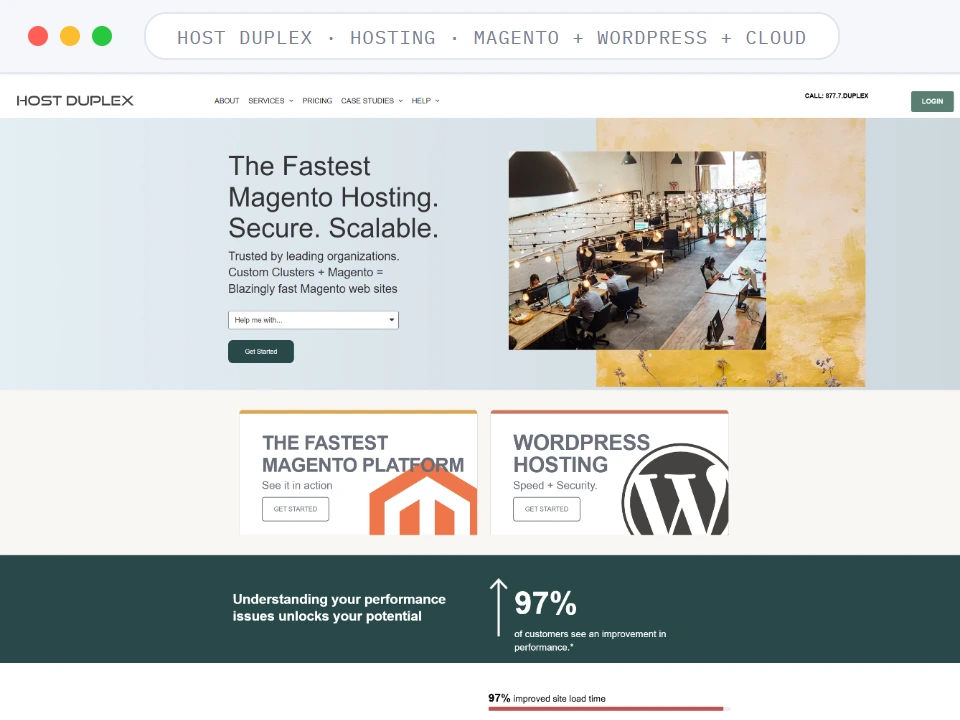 Published case study
Host Duplex
HOSTDUPLEX.COM
Host Duplex sells high-performance hosting, yet its own website took 8+ seconds to load. We rebuilt it on a lightweight WordPress theme and swapped plugins for custom code. Chat and tracking stayed, without slowing the site. Pages now load in under a second, with 65% fewer server requests and about 5K more organic visits.
 Published case study
iSmile Dental Spa
ISMILEDENTALSPA.COM
iSmile Dental Spa had a strong local name but an old, insecure website. Online channels brought in 1 to 2 new patients a month. We rebuilt the site on HTTPS, added treatment pages, cleaned up local listings and launched Google Ads and video. Within 6 months it ranked on page one for 75 keywords. It now sees 12 to 14 new patients a month.
 Published case study
IECA
IECA.ORG
IECA, the leading authority in ethical educational consulting since 1976, had an outdated site. Its consultant directory was hard to use and not secure. We built a secure, mobile-friendly site with a new consultant directory, SEO content and PPC campaigns. Within 6 months it drew 50K+ monthly organic visits, leads rose 18% and 750+ keywords ranked on page one.
3 FIXES YOU CAN APPLY · No card needed. No sales call required.
Demos doubled in a quarter after the funnel rewrite. Nothing about the traffic changed. The pipeline math finally works.

Move the sliders to your numbers. A redesign earns its cost from the visitors already landing on the site, before it wins a single new one.
Free · Written findings · Yours to keep
From real local owner-operator quote calls. Anything else, ask on the call, answered in the first 5 minutes.
Flat-fee, published on this page. Redefine Web prices web design services at $2,500 for a Starter build of up to 8 pages, $4,500 for up to 15 pages on Growth, and $7,500 for up to 25 pages on Scale. Enterprise builds start at $12,000 for large site estates, multi-brand groups, or multi-location businesses that need a location switcher. Pay-monthly starts at $199 per month on Growth and $349 per month on Business if you would rather spread the cost across 12 months. Every quote gets locked before design starts, so what you sign is what you pay. No revision fees, no scope-creep add-ons, no hourly billing hidden in fine print. Every tier includes copy, images sourced from your existing brand kit, Google Business Profile setup, on-page SEO setup, a contact form with click-to-call, a year of hosting and SSL, and a 30-day post-launch monitoring window with weekly reporting. Schema and live scheduling wired into your CRM start on Growth. See the Google Business Profile setup guide for what you receive at launch handoff.
Start with the job you want the site to do. For most small businesses the job is book a call, book a service, or take an order. Every page gets designed backward from that action. Redefine Web runs an owner interview first, then audits your current site, then benchmarks 5 direct local competitors on mobile, desktop, and conversion path. That produces a 1-page brief you sign before we touch a pixel. Design starts on the phone view, not the desktop, because 68% of local searches happen on mobile. Home plus up to 7 inner pages on Starter, click-to-call locked above the fold, service area map baked into the home page, and Google Business Profile wired in during engineering. Every button and every headline gets tested against a real booking action in a click-through Figma prototype before we write production code. From Growth up, the Core Web Vitals benchmark gates every page before launch, so slow small business sites never leave staging.
Total cost depends on page count, integrations, and whether you need custom logic on top of the standard build. A brochure site of up to 8 pages for a solo owner-operator runs $2,500 on the Starter tier. A site of up to 15 pages with booking, blog, and Google Business Profile integration runs $4,500 on Growth. A site of up to 25 pages with service area pages, local citation setup, a CRO testing setup, and a dedicated project lead runs $7,500 on Scale. Custom small business web development for a franchise, multi-brand parent, or ecommerce sub-site starts at $12,000 and gets scoped in the first week. Hosting and SSL for the first year come with every build, and after that hosting sits inside the maintenance retainer at $199, $299, or $499 per month, so you never get a separate hosting bill from Redefine Web or a third-party host. Domain registration is on you. Every price includes copy written by Redefine Web, images sourced or licensed for your brand, on-page SEO setup, a WCAG 2.1 AA accessibility pass, and a 30-day post-launch monitoring window with weekly reports, with schema added from Growth up. Change orders after sign-off get quoted flat-fee, never hourly. You see the number before the work starts.
The best small business website is the one your customers can use on their phone in under 3 seconds, that shows your phone number without a scroll, and that ranks in the local pack for the service they searched. Platform matters less than execution. Redefine Web builds every small business website on hand-tuned WordPress with LiteSpeed caching and edge CDN because it holds up long term, edits without a developer, and stays fast on mobile, with a Core Web Vitals speed budget on every page from Growth up. Wix and Squarespace look fine on day one but lose Core Web Vitals as pages grow, and they cap the schema and redirect controls you need for real local SEO. If you already run Shopify for products, we build the marketing site on WordPress and connect the two, so your best sales page and your best product page both stay fast. See the Google Search central docs for the signals we design toward.
Wix and Squarespace win on day-one ease. Both let a non-technical owner drag a template into shape in a weekend. The catch shows up in year 2. Templates lock the schema, the caching, and the redirect logic that Google reads for local pack ranking. Small business web development on WordPress takes more setup on day 1 but rewards you with speed, schema control, and 3rd-party integrations that keep working as your business grows. Redefine Web ships every WordPress build with SCF-driven editing, so your marketing lead can update copy, swap images, or add a new service page without opening a support ticket. If your only job is a 3-page portfolio for a photographer, Squarespace is fine. If the job is book more calls, rank in the local pack, and integrate a booking tool plus a CRM plus review sync, hand-tuned WordPress is the answer. We hand you the credentials at launch either way.
Content, context, community, customization, communication, connection, and commerce. The 7 Cs framework was written for enterprise sites but the same 7 apply to custom small business websites. Content answers the question your customer typed into Google. Context matches the local intent, so a Chicago plumber does not read like a national brand. Community shows real reviews from real local customers pulled through from Google Business Profile. Customization means the site adapts to the visitor, so mobile shows click-to-call first and desktop shows the map first. Communication is the click-to-call button, the booking widget, and the contact form wired to your CRM. Connection is the integration with your booking tool, your review platform, and your GBP account. Commerce is the transaction, whether that is a booked call, a paid deposit, or a product sold through the site. Redefine Web audits every build against all 7 before launch, then tracks each one in GA4 for the first 30 days.
ChatGPT writes code and copy, but it does not host, wire GBP, connect a CRM, register a domain, or hit Core Web Vitals on real mobile hardware. You can ship a rough 1-page site in a weekend with ChatGPT plus a static host, and for a hobby project that is fine. For a small business that needs to rank in the local pack, take booked calls, and integrate with a booking tool, ChatGPT is a helper, not a builder. Redefine Web uses ChatGPT and Claude in the writing phase to draft first-pass copy against your interview transcript, then rewrites every headline with the owner in the room. Every line of code released by our team is hand-tuned, reviewed, and QA-tested on real phones. If ChatGPT could replace a small business website agency, the local pack would already be full of ChatGPT sites. It is not. The signal beats the shortcut.
Buy a domain, pick a platform, write your copy, launch. That is the DIY path and 40% of small businesses run it. It saves cash and costs time. Plan for 60 to 120 hours across setup, copy, images, schema, and the Google Business Profile connection. Use WordPress plus a lightweight theme, or Squarespace if you want less setup. Wire Google Business Profile before you write a single service page. Set up GA4 and Search Console on day one. Compress every image to under 200 KB. Add LocalBusiness schema to every page. If you have never edited a robots.txt file or written a 301 redirect, budget an extra week for the learning curve. If your time is worth more than the setup, hire an agency and get the build done in 4 to 10 weeks. Redefine Web starts small business web design at $2,500 and hands you a fully documented site with credentials, source files, and a written launch checklist.
Yes on every tier. Google Business Profile is half the reason a small business website works. Redefine Web connects the site to your GBP during engineering, not after launch. NAP data syncs across the site and the profile, and from Scale up, across every citation source. The review widget embeds on the home page and refreshes hourly. GBP call tracking wires into GA4 so you can see which posts and pages send local pack calls. Your GBP posts, Q and A, and service categories get audited and cleaned as part of the build. If you have multi-location small business web development, an Enterprise build sets up the parent GBP and every child location, then adds a location switcher in the header that reads the visitors zip code and routes them to the closest shop. Every field we audit before we set anything live for your business gets a written note, and you can expect a call log ready inside GA4 by launch week with source data flowing.
That is the whole point of the build. Every Redefine Web small business website ships with a location-specific H1, a service area section on the home page, city pages for your serviceable zips within your tier's page count, and internal links from every service page back to the location page. From Growth up, every page also carries LocalBusiness, Service, and Review schema. Local pack is not one thing. It is 40 signals covering GBP completeness, review count, review recency, citation consistency, on-page relevance, mobile speed, click-through rate, and proximity to the searcher. We wire them during the build, with schema and the speed budget from Growth up and citation setup from Scale up, then watch each one in Search Console for the first 30 days after launch. Custom small business websites for competitive verticals like plumbing, dental, and legal get an extra week of local content work in the Growth and Scale tiers because the local pack ranks tighter there. The signal is boring, repeatable work done in the right order. That is how the local pack rewards it, and every ranked page we ship proves it.
4 to 10 weeks from kickoff to launch on a signed timeline. Starter launches in 4 to 6 weeks. Growth in 6 to 8 weeks. Scale in 8 to 10 weeks. Custom small business web development stays inside the same 4 to 10 weeks when the scope includes multi-location, ecommerce, or CRM logic. Every week has a fixed deliverable and a signed handoff so nothing drifts on the calendar. Week 1 signs off the brief. Weeks 2 to 3 sign off the design. Weeks 3 to 6 sign off the build. Weeks 6 to 8 launch and start 30-day monitoring. If your business runs a seasonal window like tax season or summer wedding season, we build to that window and target a launch 2 weeks before demand peaks. Delays only happen when you delay copy or approval, and we track slip risk weekly so you see it before it costs you a launch date on the calendar. Every timeline dependency and every owner-side approval gets flagged 5 business days before it can slip.
Yes. You own everything at handoff. WordPress admin, hosting login, domain registrar, Git repository, Google Business Profile, GA4, Search Console, Meta Business, and every design source file for the build. Redefine Web hands you an ownership document at launch that lists every credential, every asset location, and every third-party account tied to the site. If you leave for another agency 6 months in, everything moves with you and nothing gets held hostage. The Figma files, the copy docs, the schema markup files, the redirect map, and the 30-day post-launch monitoring reports all live in a shared drive you own from day 1. A small business website should never lock you into a vendor. Optional monthly maintenance at $199, $299, or $499 per month keeps us on the account for edits, security patches, and plugin updates, with Core Web Vitals tune-ups from the $299 plan. It runs a 6-month minimum term, then month to month on 30 days written notice. Leaving inside the minimum term means paying the remaining months of the term. The site stays yours the whole time with nothing held back.
Free · Written in 24 hours · No pitch
A written report in your inbox within 24 hours, with three fixes you can ship the same week, whether or not you hire us.
Written in 24 hours · 10,000+ audits run · 300+ clients since 2021


