Fixed price
$2,500
One-time project
Starter, up to 8 pages

Redefine Web WordPress website development services replace Elementor and Divi stacks with a lean custom Gutenberg theme. Your marketing team edits real blocks, the site loads fast, and Core Web Vitals turn green. We write real PHP, deliver Gutenberg blocks your ops lead can use, and launch every build from Growth up at 95+ mobile Lighthouse. Fixed scope, fixed timeline, code you own at handoff.
Selected clients we've run full marketing programs for


If any of these looks familiar, the free website audit names the fix and what it's worth before you spend a dollar.
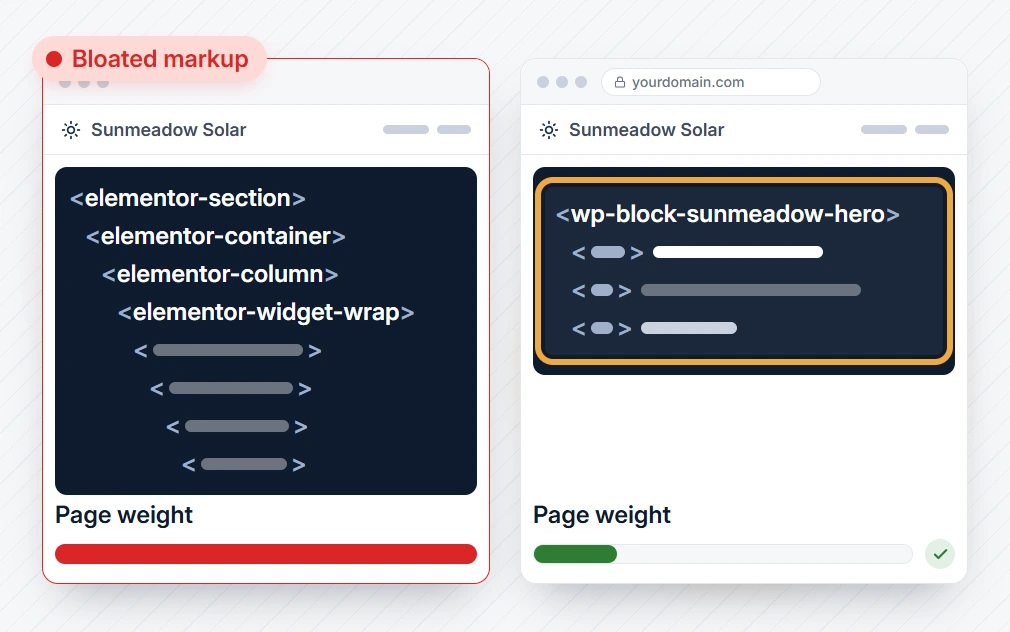
Elementor, Divi, and WPBakery push every layout div, every widget, and every option class into the DOM whether the page uses it or not. Custom Gutenberg blocks render only what the block renders. Page weight drops 3 to 5x, Core Web Vitals turn green, and your hosting bill stops climbing every quarter.
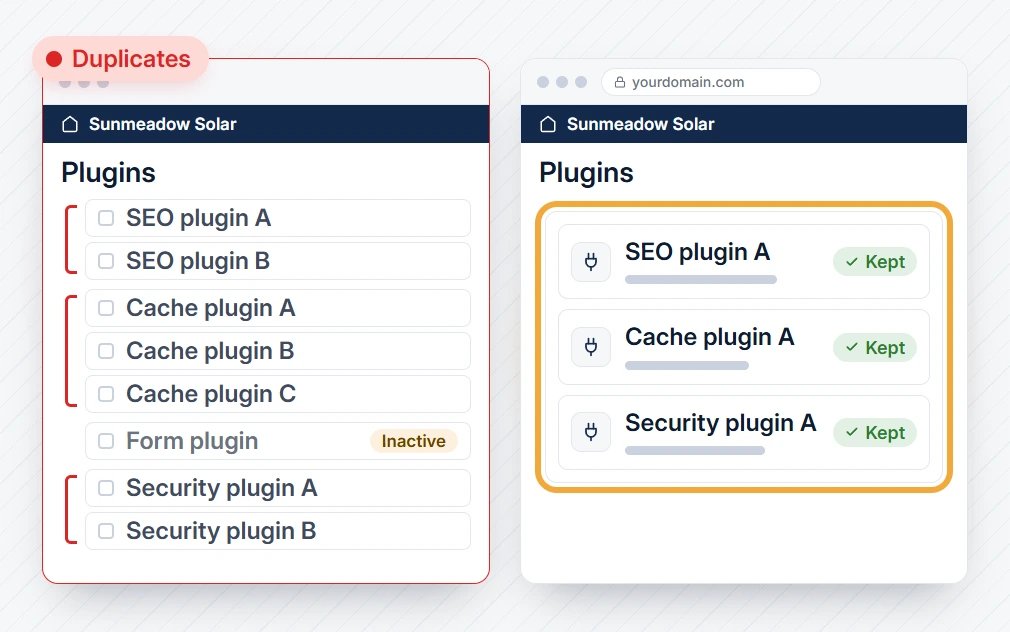
Two SEO plugins, three caching plugins, one form plugin no one uses, and a security plugin fighting Wordfence. Every plugin adds attack surface, database rows, and a load hook. We audit the stack, cut duplicates, and document what stays. Most builds run under 15 plugins after the cull.
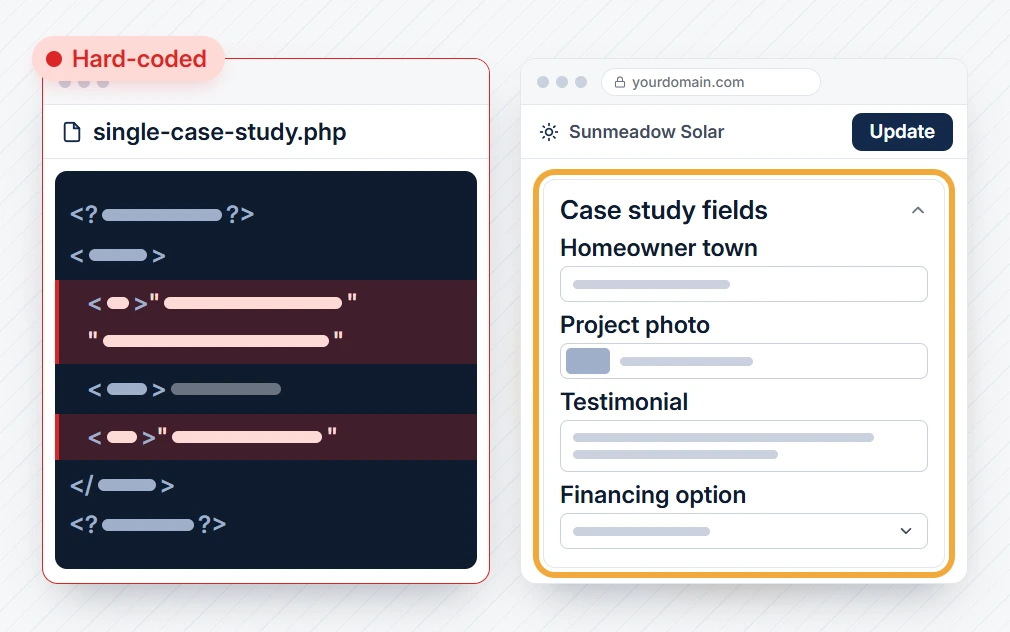
Case studies, pricing tiers, and testimonials hard-coded into template files mean every content change becomes a developer ticket. ACF or SCF field groups keep structured content typed, portable, and editable in the block editor. Your marketing team ships pages without opening a repo.
What a custom WordPress build delivers, from web design on WordPress to code you own. Custom design and the speed gate start on Growth, and ownership comes with every tier.
Lean custom theme in your git. Real Gutenberg blocks in PHP and JavaScript. Marketing edits without a developer, any WordPress engineer extends after handoff.
Critical CSS inlined, deferred JavaScript, WebP with srcset, self-hosted fonts. From Growth up, LCP under 1.8s, CLS under 0.05, and INP under 200ms verified in Lighthouse and CrUX.
Your git, CMS logins, Figma file, hosting account, and domain. WCAG 2.1 AA documented, Wordfence hardened, ACF or SCF typed. Walk away with the site whole.
Same rhythm across every WordPress web design and development project. Each stage ends in a written deliverable and a working site. Fixed scope, fixed timeline, and calendar dates on every milestone.
Custom post types, custom taxonomies, ACF or SCF field groups, and editor workflows mapped before design starts. Existing plugin footprint audited and pruned. Nothing moves until owner, ops lead, and marketing lead sign off on the content model.
Every custom Gutenberg block designed and prototyped in Figma. Editor experience matched to your marketing team workflow. Engineer validation runs the same week the block is drawn so we catch render or accessibility gaps before build.
Custom lightweight theme committed to your git. Custom Gutenberg blocks in real PHP and JavaScript. ACF or SCF wired per template. LiteSpeed or WP Rocket configured, WebP pipeline live, and Wordfence plus 2FA hardened before staging opens.
WP-CLI and WP Migrate for the staged cutover. Lighthouse verified pre-launch. A 301 map from the old URLs from Growth up. 30 days of Search Console and Core Web Vitals monitoring. Site live, keys handed over, repo in your name.
Fixed scope. Fixed timeline. Fixed outcomes. From WordPress web page design to launch, each phase below has a defined deliverable, a written sign-off, and a date on the calendar.
Owner interviews, technical audit of your current WordPress site, plugin footprint review, analytics and ad account audit, competitor benchmark of five direct peers, and a written brief your leadership can sign off on before we design a pixel or write a line of code.

Three or four working sessions with owner, ops lead, and marketing lead. Baseline goals, current site pain, and revenue targets locked in writing.
Current WordPress theme reviewed, plugin footprint mapped and pruned, analytics and ad accounts checked, and Core Web Vitals baseline captured.
Side-by-side of five direct peers on mobile speed, conversion path, organic visibility, and editor experience.
Custom post types, custom taxonomies, and ACF or SCF field groups mapped to your content types before design starts.
A brief covering target persona, page architecture, conversion goals, and integration plan. Owner and marketing lead sign.
Every existing plugin scored keep, replace, or cut. Documented rationale for each so the ops lead can defend the stack later.
Mobile-first design system with conversion patterns baked in from wireframe. Every custom Gutenberg block drawn in Figma. Engineer validates each block the same week it is drawn so render, accessibility, and editor UX all get caught early. You get a Figma file your team owns.

Type scale, color, spacing, button, and form library documented and engineer-validated. Ready to hand to any future designer.
Home, services, about, resources, and contact. Phone view drawn first, desktop second. Every layout tested on real phones before build.
Every block your marketing team will use, drawn in Figma with editor states, error states, and empty states covered.
Each pattern for the primary conversion action is sized against your industry benchmark and validated on real users before code.
Click-through Figma prototype tested on real phones so we surface the awkward flows before production code gets written.
Color contrast, focus order, and screen-reader labels annotated on every block so build hits WCAG 2.1 AA on the first pass.
Custom WordPress theme in real PHP or headless Next.js by default. LiteSpeed and edge CDN, WCAG 2.1 AA verified before launch, and from Growth up, Core Web Vitals as an acceptance criterion. Nothing reaches production without hitting the numbers. Your git, your commits, your ownership.

Fully responsive across phone, tablet, desktop, and large displays. Cross-browser QA on Chrome, Safari, Firefox, and Edge. Committed to your git.
Real PHP plus JavaScript block set. Renders identically in the block editor and on the front end. Any WordPress developer can extend after handoff.
Structured content typed per template. Case studies, testimonials, pricing tiers, team, and FAQ all editable in the block editor without a developer.
From Growth up, LCP under 1.8s, CLS under 0.05, and INP under 200ms verified via Lighthouse and CrUX field data, and mobile Lighthouse 95+ is a release gate.
Axe automated scans, manual audit, NVDA on Windows, and VoiceOver on Mac plus iOS. Documented conformance statement delivered with the build.
Wordfence, 2FA on every admin, disabled file editing, hardened wp-config, automatic security updates, and nightly off-site backups.
CRM, analytics, tracking, and third-party integrations wired end to end. Forms and conversion events route straight into your CRM with campaign-source tagging on every submission. Documented abstraction layers so the next stack swap takes days, not months.

HubSpot, Salesforce, Pipedrive, or Zoho. Lead data written on submit, campaign source tagged so paid channels get real attribution.
GA4 conversion events, Meta CAPI, Google Ads pixels with server-side backup. Every event named against your revenue model.
Custom WooCommerce theme, product data structure, subscription integrations, and custom checkout logic, quoted separately on top of the tier.
Trustpilot, Google, or Clutch feed piped into service pages. Star ratings visible in organic SERPs via valid schema.
Mailchimp, Klaviyo, ActiveCampaign, or Customer.io wired to form submissions. Segment routing documented.
Every integration mapped in a README your next engineer can read cold. Environment variables, API scopes, and rotation cadence all in the doc.
Production DNS cutover, a 301 map from the old site on Growth and up, uptime and Core Web Vitals monitoring live, and a 30-day post-launch support window. Your team keeps the design files, CMS logins, and repo. Nothing is held hostage after go-live.

From Growth up, old URLs redirected to the new architecture. No organic traffic loss on launch day. Search Console change of address filed.
Uptime pings every 60 seconds with Slack and SMS alerts. Weekly Core Web Vitals field-data digest for the first 30 days.
Fixes and tweaks covered inside the 30-day launch window. No change-order shell games.
Design files, CMS logins, repo access, README, and a written architecture doc. Ownership sits with you at handoff.
Impressions, clicks, and index coverage watched daily for 30 days. Any organic dip flagged and fixed under the launch window.
Roll into WordPress maintenance from $199/mo bundled hosting, or a growth retainer from $750/mo for ongoing engineering work.
Our WordPress website design service runs design, build and handoff as one job, because how a site is drawn decides what your team can edit and keep.
Good web design on WordPress plans the look and the editing together, so pages stay on brand when your team changes them. From Growth up, we draw a custom design system in Figma, phone view first. The WordPress web page design covers the home, services, about, resources and contact pages, plus every Gutenberg block your team will use. You click through a prototype on real phones before code starts.
Web development on WordPress should turn each drawn page into blocks your team can edit without breaking the layout. Our engineer checks every block the same week it is drawn, so render and accessibility gaps surface before build. The blocks are real PHP and JavaScript, with no page builder, and they look the same in the editor as on the live site.
A WordPress web design company should hand you a site you control, at a price fixed before work starts. Our four build tiers are on this page, from $2,500 on a lean template base to custom engineering from $12,000. Every tier ends the same way. The code sits in your git, and the CMS logins, hosting account and domain are yours.
Custom Gutenberg theme and 95+ mobile Lighthouse from Growth up, under 15 plugins on most builds, WCAG 2.1 AA, and a fixed calendar date. Written into the contract before day 1, not the pitch. · No card needed. No sales call required.
Fixed price, published on the page, no shell games. Every tier is a one-time build quoted before work starts, not a monthly bill. Hover any feature to see what it means.
THE FOUNDATION: New businesses that need a credible, fast site on a template base
EVERYTHING IN STARTER, PLUS: Single-location businesses replacing an underperforming site
EVERYTHING IN GROWTH, PLUS: Larger sites with more page templates and integrations
EVERYTHING IN SCALE, PLUS: Large site estates, multi-brand or multi-location
EVERY TIER · FIXED-PRICE SOW · 4 TO 10 WEEK BUILD · 30-DAY LAUNCH MONITORING · YOU OWN CODE, HOSTING + DATA
Each one includes where the client started, what we changed and what happened.
 Published case study
Host Duplex
HOSTDUPLEX.COM
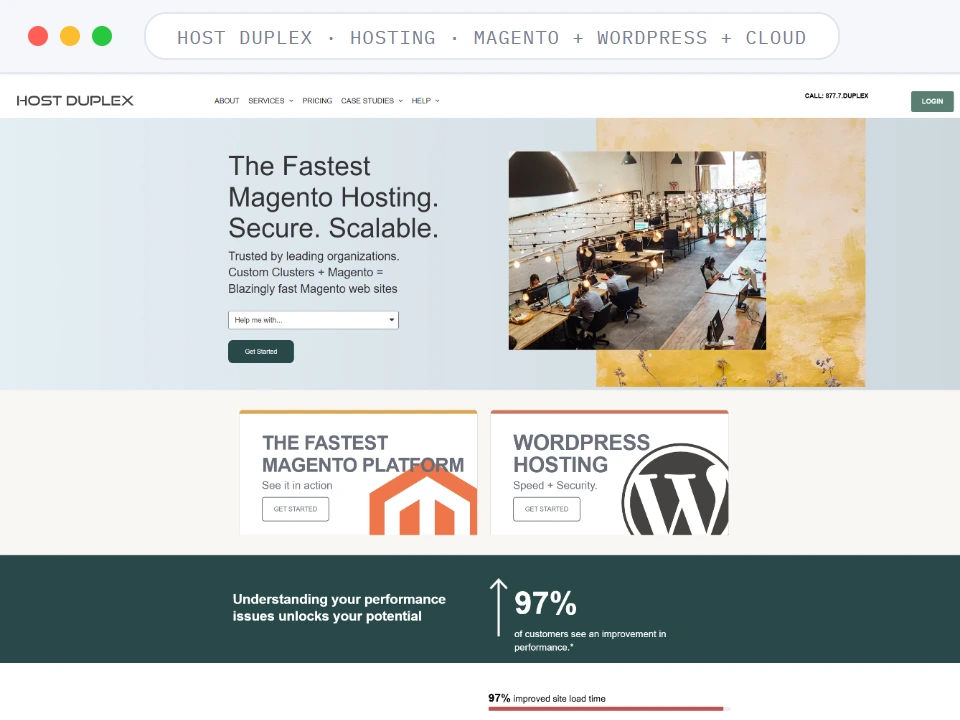
Host Duplex sells high-performance hosting, yet its own website took 8+ seconds to load. We rebuilt it on a lightweight WordPress theme and swapped plugins for custom code. Chat and tracking stayed, without slowing the site. Pages now load in under a second, with 65% fewer server requests and about 5K more organic visits.
 Published case study
iSmile Dental Spa
ISMILEDENTALSPA.COM
iSmile Dental Spa had a strong local name but an old, insecure website. Online channels brought in 1 to 2 new patients a month. We rebuilt the site on HTTPS, added treatment pages, cleaned up local listings and launched Google Ads and video. Within 6 months it ranked on page one for 75 keywords. It now sees 12 to 14 new patients a month.
 Published case study
IECA
IECA.ORG
IECA, the leading authority in ethical educational consulting since 1976, had an outdated site. Its consultant directory was hard to use and not secure. We built a secure, mobile-friendly site with a new consultant directory, SEO content and PPC campaigns. Within 6 months it drew 50K+ monthly organic visits, leads rose 18% and 750+ keywords ranked on page one.
Custom Gutenberg theme and 95+ mobile Lighthouse from Growth up, under 15 plugins on most builds, WCAG 2.1 AA, and a fixed calendar date. Written into the contract before day 1, not the pitch. · No card needed. No sales call required.
Demos doubled in a quarter after the funnel rewrite. Nothing about the traffic changed. The pipeline math finally works.

Move the sliders to your numbers. A redesign earns its cost from the visitors already landing on the site, before it wins a single new one.
Free · Written findings · Yours to keep
Straight answers on cost, timeline, page builders, security, hosting, WooCommerce, editing, migration, and accessibility. Call or email if we missed yours.
Our WordPress website design service comes in four fixed-price tiers published on this page, at $2,500, $4,500, $7,500, and from $12,000. Custom WordPress engineering starts at $12,000 fixed price. That covers a lean custom theme in real PHP, custom Gutenberg blocks, ACF or SCF field groups, Core Web Vitals tuning, WCAG 2.1 AA accessibility, Wordfence security, and staged launch with a 301 map. What you pay depends on page count, CRM integration depth, and whether WooCommerce or a multi-site network is in scope. Nothing in the quote is a placeholder for a change-order later. Pay-monthly plans start at $199 per month if you prefer to spread the cost instead of paying a tier upfront. Ongoing engineering runs on a retainer from $750 per month. Managed hosting bundles into maintenance from $199 per month, with Core Web Vitals tune-ups from $299. Every price is published on the page so there are no shell games in the quote, and the fixed-price contract removes hourly scope creep on the build. Multi-site engagements are scoped on the Enterprise tier.
Most WordPress complaints trace back to page-builder bloat, plugin conflicts, and slow hosting, not the platform. Sites built on Elementor, Divi, or WPBakery stack 40 plugins to reach parity with a custom Gutenberg theme, which drags Core Web Vitals and inflates the maintenance bill. Custom web development on WordPress, built on real Gutenberg blocks, fixes the root cause. Redefine Web custom WordPress development delivers a lean theme, under 15 plugins, real PHP blocks, and 95+ mobile Lighthouse at launch. WordPress still powers 40.2% of the web because the block editor, plugin ecosystem, and content model beat most closed platforms on flexibility and ownership. Teams that stay report faster editing, cleaner analytics, and lower total cost of ownership year over year. If you already run Elementor or Divi, we either extend it carefully or migrate to Gutenberg, priced upfront. Buyers who left WordPress for Wix, Squarespace, or Webflow often come back once the closed platform blocks a real content model or spikes seat fees at scale.
Freelance WordPress developers charge $50 to $150 per hour in North America. A WordPress website agency like Redefine Web packages the same work as a fixed-price custom WordPress development engagement so you avoid hourly scope creep. Custom builds start at $12,000 all-in, and ongoing engineering runs on a retainer from $750 per month. Hourly rates hide the true cost of a full build. A custom theme, custom Gutenberg blocks, ACF or SCF field groups, CRM integration, Core Web Vitals tuning, and WCAG 2.1 AA accessibility typically run 120 to 250 developer hours. Multiplying hours by rate lands in the same $12K to $40K range, but without a fixed price you carry the timeline risk. Fixed price transfers that risk to us. If you need only maintenance, WordPress maintenance plans from $199 per month cover updates, backups, and small tweaks. Contract-based engagements give your finance team a predictable line item and stop the monthly billing surprise a solo freelancer creates.
No. WordPress still powers about 40.2% of every site on the web in 2026 and 63% of the CMS market. The block editor rewrote the editing experience, full site editing added theme.json and block themes, and headless WordPress with React or Next.js is a first-class option. Custom WordPress development on Gutenberg blocks scales cleanly against any modern stack. A real WordPress web design company delivers a lean theme, real PHP blocks, ACF or SCF field groups, and 95+ mobile Lighthouse without page-builder bloat. What is dated is the Elementor plus 40-plugins pattern from 2018. Custom Gutenberg fixes that. Google favors fast, structured sites with valid schema per its Search Central documentation. A well-built WordPress site clears every ranking factor the platform can be blamed for. The core team ships a new WordPress release every four months, so the platform keeps pace with modern web standards. Every major WordPress release ships an accessibility, performance, and security review baked in.
Custom WordPress development means the theme is coded from scratch for your brand, your content types, and your marketing team editing workflow. A template build starts with a purchased ThemeForest theme, drops in Elementor, and stacks 30+ plugins to reach parity. Custom scales cleanly, template builds accumulate tech debt fast. With custom WordPress development you get a real PHP theme, custom Gutenberg blocks per section pattern, ACF or SCF field groups matched to your content types, hand-tuned Core Web Vitals, no page-builder markup, portable code any WordPress engineer can extend, and full ownership of the git repo. Template builds save money upfront and cost more in year two when performance and plugin conflicts start biting. As a WordPress web design agency, Redefine Web builds custom from the Growth tier up, and Starter runs on a lean template base. The published tiers start at $2,500 and custom engineering builds start at $12,000 fixed. Every build ships with a written architecture doc so future engineers can pick up the code cold without a knowledge-transfer meeting. Custom builds also let you drop unneeded plugins in year two rather than inherit them forever.
Custom WordPress engineering starts at $12,000 fixed price. That covers a lean custom theme, real Gutenberg blocks in PHP and JavaScript, ACF or SCF field groups, CRM integration, GA4 plus Meta CAPI setup, Core Web Vitals tuning, and WCAG 2.1 AA accessibility. Enterprise scope with a multi-site network, custom block library, headless architecture, or SOC 2 documentation is quoted separately. Smaller scopes fit the published web design tiers at $2,500, $4,500, and $7,500, or a pay-monthly plan from $199 a month. Ongoing engineering runs on a retainer from $750 per month. Managed WordPress hosting bundles into maintenance plans starting at $199 per month. Every price is published on the page so there are no shell games in the quote. Fixed scope, fixed timeline, and code you own at handoff. Cost drivers include page count, integration depth, and whether WooCommerce sits inside the build. Payment terms split 40% at kickoff, 40% at design signoff, and 20% at launch.
Yes. WordPress remains the strongest open-source website builder in 2026 because it separates content from presentation, ships a real REST API, supports headless architectures, and runs on any host. A WordPress website builder in the page-builder sense (Elementor, Divi, WPBakery) is what people mean when they call WordPress slow. Custom Gutenberg fixes that. Redefine Web custom WordPress development delivers a lean theme, real PHP blocks, and 95+ mobile Lighthouse without a page builder in sight. Compared to closed platforms like Wix, Squarespace, or Shopify, WordPress gives you full ownership of code, no per-user seat fees, no vendor lock-in, and the largest plugin ecosystem on the web. Complex content models, custom taxonomies, and enterprise integrations all sit inside core. Any WordPress engineer can extend the theme after handoff. The block editor keeps pace with visual builders on speed of edit while preserving structured content the way the closed platforms cannot. A modern block theme also lets your designer ship template variants without any code review round.
WordPress wins for any site that needs custom content types, real ownership, or growth past 20 pages. Wix is faster to launch a 5-page brochure site with zero developer input and stays cheaper under $30 per month for small sites. Beyond that, a custom WordPress website builder approach delivers more control, better SEO structure, and no per-user seat fees. Wix locks your content to their editor and export is limited to a static HTML dump. WordPress ships a REST API, standard database schema, and portable content. You can move a WordPress site to any host in an afternoon. Custom Gutenberg blocks, ACF or SCF field groups, and headless WordPress with Next.js scale where Wix caps out. If you plan to run paid ads, publish weekly, sell products, or integrate a CRM, WordPress is the correct call. If you need a landing page live by Friday and never touch it again, Wix is fine.
WordPress the software is free and open source, downloadable from wordpress.org. What costs money is hosting, a domain, premium plugins, a paid theme or custom theme development, and any developer time you need. Free WordPress plus a $5 per month shared host runs about $60 a year for a basic site. A Redefine Web WordPress build starts at $2,500 on the published tiers, and a custom engineering engagement starts at $12,000 fixed price because that covers a lean custom theme, real Gutenberg blocks, security hardening, Core Web Vitals tuning, and WCAG 2.1 AA accessibility. Free WordPress plus a page builder plus 20 plugins is the trap most sites fall into. Managed hosting bundles into WordPress maintenance plans from $199 per month. Ongoing engineering runs on a retainer from $750 per month. Nothing is a placeholder for a change-order. Free is only free if you already have the developer skill to build, secure, and maintain the site yourself. Total cost of ownership evens out around year two once maintenance is factored in.
No. Every Redefine Web custom WordPress development project uses custom Gutenberg blocks instead of page builders. Real PHP, real JavaScript, editable in the block editor, and rendering identically in editor and on the front end. Page builders create tech debt, performance drag, and vendor lock-in. Custom Gutenberg is native to WordPress core so there is no plugin dependency, outputs real HTML instead of shortcode soup, runs 3 to 5x lower page weight vs Elementor, scores faster Core Web Vitals, and stays portable if you ever migrate off WordPress. Any WordPress developer can extend a Gutenberg theme without Elementor-specific knowledge. If you already run Elementor or Divi, we either extend it carefully or migrate to Gutenberg, priced upfront. Custom Gutenberg blocks match your editor UX to the way your marketing team already works. Full site editing plus theme.json give designers control without giving the marketing team a broken editor. Migration from a page-builder site keeps every URL alive with a mapped 301 plan.
Yes. WooCommerce is quoted separately on top of the build tier, for any custom WordPress development engagement that needs it. It covers custom WooCommerce themes, product data structures, subscription integrations, and custom checkout logic, and catalogs above 500 SKUs take a larger quote because catalog import, tax rules, and payment gateway integrations grow the scope. Every WooCommerce build ships with schema markup for products, reviews, and offers, GA4 ecommerce events, Meta CAPI purchase events, and abandoned-cart flows wired to Klaviyo or Mailchimp. Payment gateways covered include Stripe, PayPal, Square, and Authorize.Net. Subscription management runs on WooCommerce Subscriptions or WP Fusion depending on your CRM. If you need a headless commerce architecture with WooCommerce and Next.js, that stays in scope on the enterprise tier. Product feeds also sync to Google Merchant Center and Meta catalogs for paid social and shopping campaigns. Refund and dispute logic wires cleanly into HubSpot, Salesforce, or your CRM of record.
Headless WordPress means WordPress runs the CMS and content API while the front end is built in Next.js, Nuxt, or Astro. Redefine Web custom WordPress development delivers headless architectures on the enterprise tier when the site needs edge rendering, tight page-transition animations, or a shared front end across multiple markets. The WordPress side keeps ACF or SCF field groups, custom post types, and the block editor. The front end consumes the REST API or WPGraphQL and renders at the edge on Vercel, Netlify, or Cloudflare Pages. Editors keep the same block editor experience without touching the front end. Preview URLs work end to end so marketing sees changes before publish. Integrations for HubSpot forms, GA4, and Meta CAPI wire the same way as a monolithic WordPress build. Headless adds cost, so it stays optional. Monolithic WordPress covers 90% of sites just fine. If you already run a Next.js front end, we plug WordPress in as the content backbone.
Free · Written in 24 hours · No pitch
A written report in your inbox within 24 hours, with three fixes you can ship the same week, whether or not you hire us.
Written in 24 hours · 10,000+ audits run · 300+ clients since 2021


