Food and beverage web design that converts first orders

Storefronts for CPG, snack, and beverage brands on WooCommerce or Shopify. Subscribe and save flow, FDA nutrition PDP, allergen callouts, store locator, and Klaviyo wired in. From Growth up, every site launches at 95+ mobile PageSpeed.

4.9Across 126 reviews on 6 platforms
Fixed price
$2,500 One-time project
Starter, up to 8 pages

Where we start Weeks 1-2
Sign-off: brief + sitemap
What’s included Starter
  • Hosting + SSL, first year
  • 30-day launch monitoring
  • On-page SEO setup
Contact form + click-to-call
Ownership 100% yours
Full ownership on handoff

Selected clients we've run full marketing programs for

  • Armanino
  • BSH
  • Delicate Dental
  • Government Legal Department
  • Hightop Health
  • LifeStance Health
  • Marmalade
  • Montegra Capital Resources
  • Noelle Collins Dental Clinic
  • Oxford Capital
  • Paquin & Carroll Insurance
  • PCO Bookkeepers & M&A Specialists
  • Peaceful Mind Psychology
  • Peak Accounting Solutions
  • Pelvic Rehabilitation Medicine
  • RiverSaaS Capital
  • Rosenbaum Personal Injury Lawyers
  • Smile Design Dentistry
  • Stanhope Capital Group
  • Stella Maris
  • Tilghman Builders
  • Toyota
  • Uptime
  • VP Dental & Medical Supplies
  • Wilentz Attorneys at Law

Three ways your current storefront loses CPG orders

If any of these looks familiar, the free website audit names the fix and what it's worth before you spend a dollar.
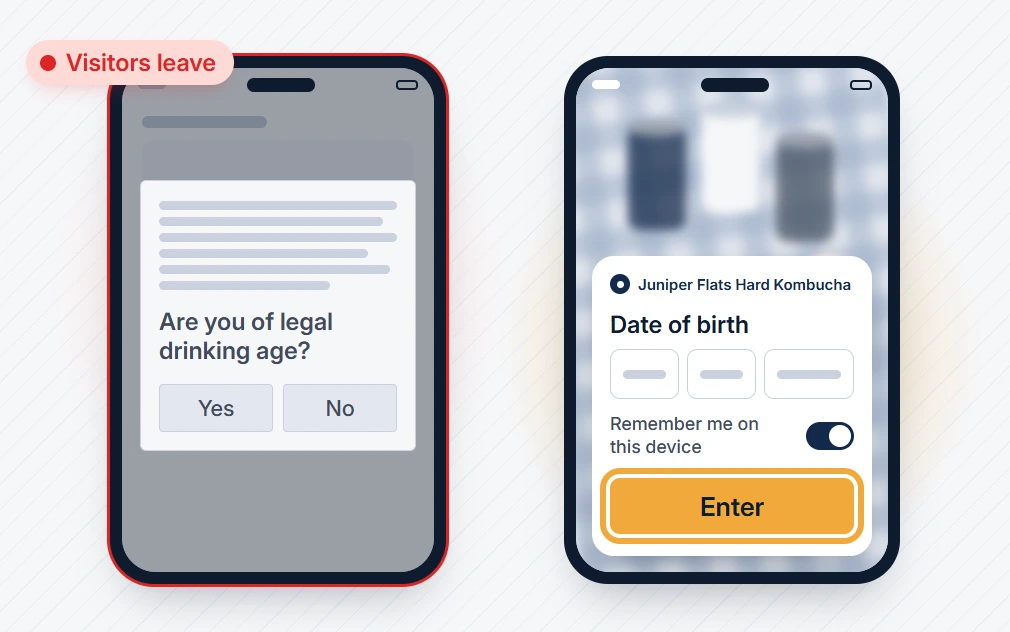
Food and beverage web design stock age gate pop-up beside a skinned brand gate that remembers the visitor
PROBLEM 01 · AGE GATE

Stock Shopify age gate bounces 47% of first-time visitors

Beer, wine, and spirits brands lose 47% of first-time shoppers at the default Shopify age gate. The pop-up feels legal, not brand. A skinned cookie gate that respects the visit and remembers on return keeps shoppers moving toward the PDP instead of closing the tab.
47% BOUNCED AT AGE GATE
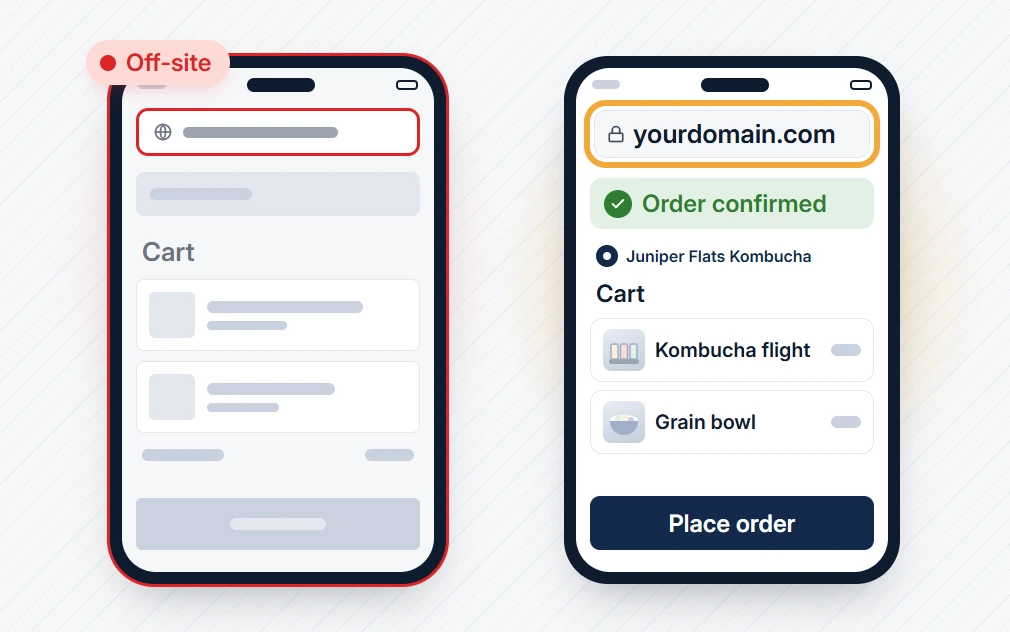
Food and beverage web design checkout that leaves for a third-party domain beside one kept in-brand to confirmation
PROBLEM 02 · CHECKOUT

Every off-site hop to Toast or ChowNow drops 18-24% of orders

Restaurant and CPG sites push shoppers off-brand to Toast, Square, or ChowNow in 3 clicks. Every off-site hop drops 18 to 24 percent of order intent. Embed the cart in-brand with Shopify or WooCommerce checkout and shoppers stay through the order confirmation.
3 CLICKS TO OFF-SITE CART
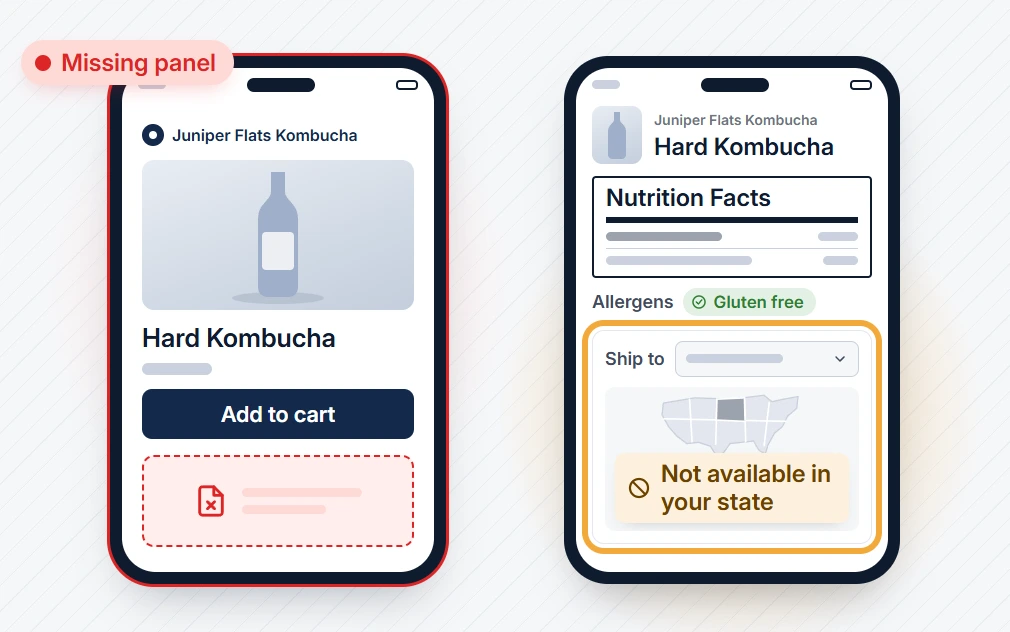
Food and beverage web design product page gaining a nutrition panel and a state shipping lock for hard kombucha
PROBLEM 03 · COMPLIANCE

CPG PDPs miss FDA nutrition panels and TTB region locks

Food PDPs skip FDA nutrition panels and allergen callouts, which shoppers now expect above the fold. Alcohol brands enter states without a permit and eat chargebacks. Every site we build lands with the compliance layer wired in before go-live, not bolted on after the first cease and desist.

FDA + TTB MISSED PRE-LAUNCH

Three outcomes every food and beverage web design engagement produces

After launch, a snack or drink brand can check three things: first orders, recipe traffic and logins in its own name.

Conversion architecture that moves the number

Architecture built to convert, sharper PDP UX, and a tighter checkout flow that beats your current baseline inside 60 days of launch on mobile and desktop.

SEO-ready launch, not a six-month retrofit build

Product and Recipe schema, nutrition metadata, and buying-intent slugs live on day one. Recipe blog URLs carry forward so organic traffic holds steady.

Brand ownership at handoff, everything in your name

Your domain, your CMS logins, your Shopify billing, and your Klaviyo and Recharge accounts sit in your name. Walk away with the site whole if you leave.

Four stages. Every step ends in a sign-off

Founder, ops and marketing leads sign each stage, and every date is set around your next retail line review or holiday window. Nothing moves before the signature.

WEEKS 1-2

Discovery that earns the brief

We interview the founder, audit the current store and map every flavor, pack size and variant in Shopify. Five snack or drink brands in your aisle get benchmarked. Founder, ops and marketing leads sign the brief.

SIGN-OFF: BRIEF + SITEMAP
WEEKS 3-6

Design built against your storefront

Mobile-first design system with CPG PDP conversion patterns, subscribe and save flow, and nutrition panel UX baked in from wireframe. Every component engineer-validated the same week it is drawn. You walk away with an editable Figma file your team owns.

SIGN-OFF: FIGMA + TOKENS
WEEKS 7-10

Engineering that survives your next Shopify upgrade

Shopify with Liquid and Hydrogen by default. Headless Next.js when the subscription flow demands it. Core Web Vitals treated as an acceptance criterion. Recharge or Skio, Klaviyo, ShipStation, GA4, and Meta CAPI wired in with server-side backup.

SIGN-OFF: STAGING BUILD
WEEK 10

Launch and 30 days of post-live watch

We switch DNS off-hours, away from any promo or restock day. For 30 days we watch Search Console, Shopify orders, subscription renewals and Core Web Vitals. On day 31 you take the keys, or move to a maintenance plan.

SIGN-OFF: LIVE + 30-DAY WATCH

What you actually get from our CPG web design services

Five phases from brief to cutover, each built around flavors, pack sizes, subscriptions and the label data a grocery shopper reads first.

BRIEF

Two weeks. Brief signed by founder, ops, and marketing

Two weeks to learn how your line sells. We interview the founder and tear down the current store, ad accounts and analytics. Five snack or drink peers in your aisle get scored, and every flavor and variant is mapped in Shopify. Founder, ops and marketing leads sign the brief before any design or code starts.

Phase Duration: BRIEF Sign-off: AUDIT
Food and beverage web design brief review as leaders take notes at a long wooden table in daylight
GATE · SITEMAP

Brand-owner interview

One hour with founder plus ops plus marketing leads to lock brand voice, category position, and non-negotiable SKUs.

Storefront tech audit

Core Web Vitals baseline, Shopify theme review, Klaviyo flow map, subscription platform check, and analytics wiring audit.

5-brand category benchmark

Five direct category peers scored on PDP pattern, subscription UX, mobile speed, and Klaviyo capture UX.

Shopify data mapping

Product feed, collection structure, variant logic, and inventory sync mapped to the new architecture before design starts.

Sitemap and IA

Full page inventory with URL structure. Recipe blog carries forward with the same URLs so organic traffic holds through the migration.

Written brief with sign-off

A brief locking flavors, pack sizes and launch dates, signed by founder, ops and marketing.

Commitments most CPG agencies refuse to make

Written into the contract: 95+ mobile PageSpeed, LCP under 1.8s, WCAG AA, a launch date set before your line review, and every recipe URL kept. · No card needed. No sales call required.

Get my website audit →

Four food and beverage web design tiers for every CPG stage

Pick the tier by how many flavors and pack sizes you sell and where you sell them. Every build is one fixed-price quote.

Starter

$2,500ONE-TIME PROJECT

THE FOUNDATION: New businesses that need a credible, fast site on a template base

  • Pages included: Up to 8
  • Contact form + click-to-call
  • Compliance-aware form handling
  • On-page SEO setup: Basic
  • Hosting + SSL, first year
  • 30-day launch monitoring
  • Full ownership on handoff
Get this quote

Scale

$7,500ONE-TIME PROJECT

EVERYTHING IN GROWTH, PLUS: Larger sites with more page templates and integrations

  • Pages included: Up to 25
  • Custom design (no template)
  • Per-service page layouts
  • Team + staff profile pages
  • Shared design system
  • Contact form + click-to-call
  • Live scheduling integration
Get this quote

Enterprise

Starts at $12,000ONE-TIME PROJECT

EVERYTHING IN SCALE, PLUS: Large site estates, multi-brand or multi-location

  • Pages included: Unlimited
  • Custom design (no template)
  • Per-service page layouts
  • Team + staff profile pages
  • Shared design system
  • Contact form + click-to-call
  • Live scheduling integration
Scope my build

Ongoing website maintenance is a separate monthly plan starting at $199/mo, and you can move that plan up or down with 30 days notice.

Every web design feature, tier by tier

SCROLL THE TABLE SIDEWAYS FOR EVERY TIER
Website + design
FEATURE
STARTER
GROWTH
SCALE
ENTERPRISE
Pages included
Up to 8
Up to 15
Up to 25
Unlimited
Custom design (no template)
—
Per-service page layouts
—
Team + staff profile pages
—
Shared design system
—
—
Booking + conversions
FEATURE
STARTER
GROWTH
SCALE
ENTERPRISE
Contact form + click-to-call
Live scheduling integration
—
Payment + financing copy
—
Compliance-aware form handling
Conversion (CRO) testing setup
—
—
SEO + visibility
FEATURE
STARTER
GROWTH
SCALE
ENTERPRISE
On-page SEO setup
Basic
Organization + LocalBusiness schema
—
Site migration + redirects
—
Core Web Vitals speed budget
—
Local citation setup
—
—
Care + support
FEATURE
STARTER
GROWTH
SCALE
ENTERPRISE
Hosting + SSL, first year
30-day launch monitoring
Team training call
—
Full ownership on handoff
Dedicated project lead
—
—
Case studies

Real brands, real numbers

Each one includes where the client started, what we changed and what happened.
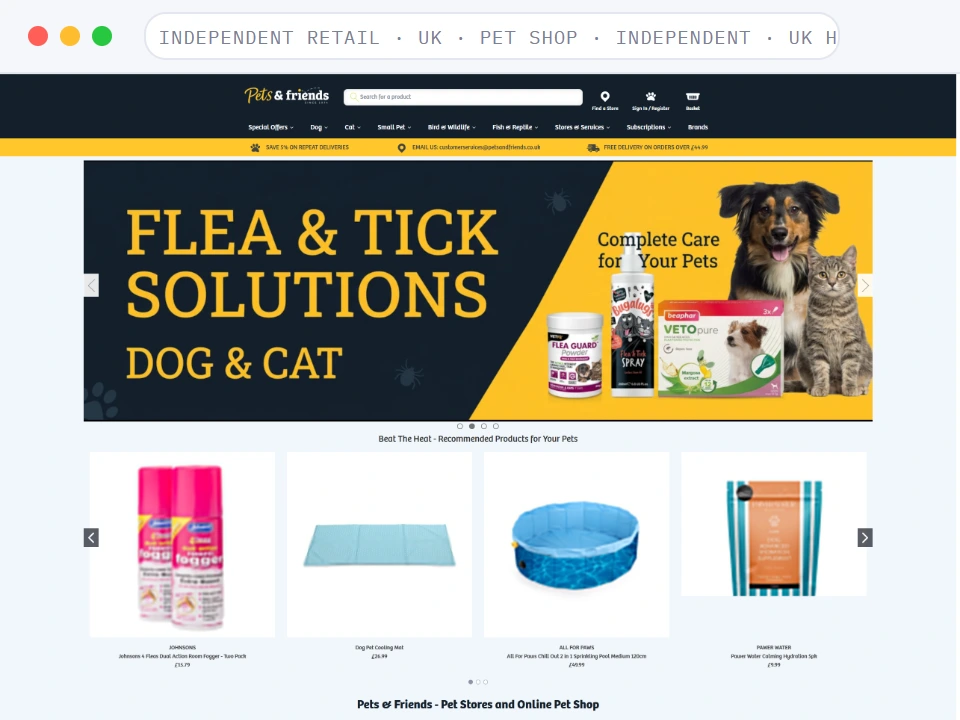
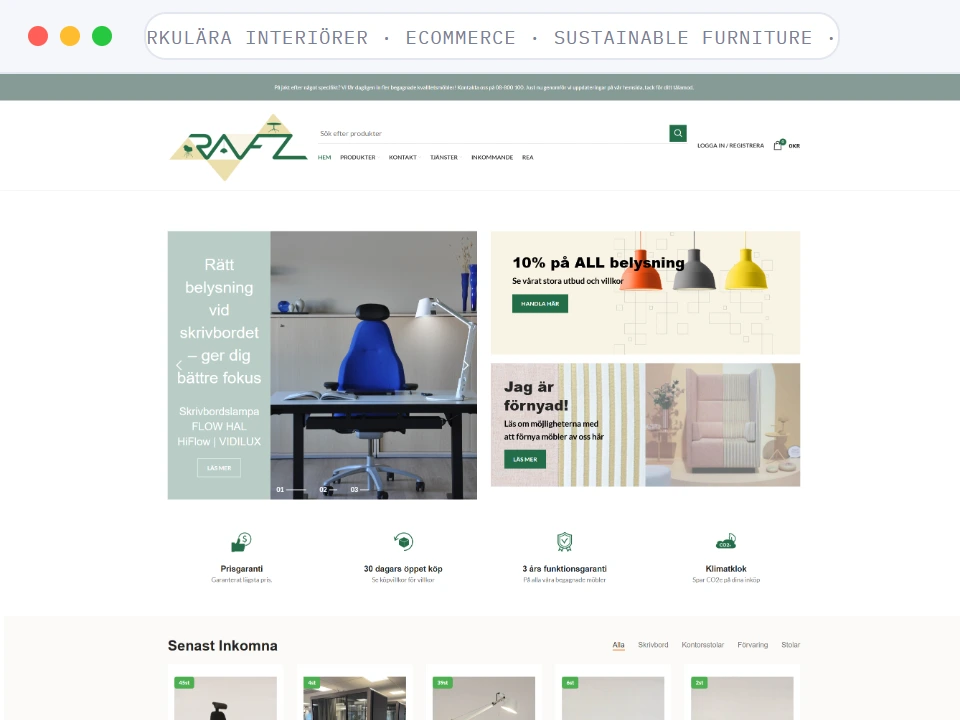
Homepage of a UK pet retail chain's online shop, shown in a browser window Published case study

Pet Shop · Multi-Store Retail · UK

Measured over one quarter
Pet Shop · Multi-Store Retail · UK Web Design · Web Development · Local SEO

Grew local inquiries 2.6× for a UK pet retail chain up against the marketplaces, with a mobile-first rebuild and daily social.

A UK pet retail chain was losing mobile shoppers to online marketplaces. Its dated site hid the phone number and had no way to order for pickup. We rebuilt it for mobile with call, WhatsApp and reserve buttons, tuned its Google Business Profile listings and posted daily on Instagram and Facebook. Within one quarter, calls and WhatsApp inquiries rose 158%, pickup orders rose 212% and repeat customers rose 47%.
+158%
Calls + whatsapp
+212%
Click & collect
+47%
Repeat customers

Commitments most CPG agencies refuse to make

Written into the contract: 95+ mobile PageSpeed, LCP under 1.8s, WCAG AA, a launch date set before your line review, and every recipe URL kept. · No card needed. No sales call required.

Get my website audit →

Client words

Demos doubled in a quarter after the funnel rewrite. Nothing about the traffic changed. The pipeline math finally works.
Myles Scolnick
Head of Growth, QuoteWell
Verified via NPS survey 2x booked demos 41s lead response time
QuoteWell Insurance website homepage in a browser window, a wholesale insurance hero above the industries it serves
1 / 10

See what a higher converting site is worth

Move the sliders to your numbers. A redesign earns its cost from the visitors already landing on the site, before it wins a single new one.

4,000
200 50,000
$800
$100 $10,000
1.5%
0.5% 6%
What a 20% improvement on your current conversion rate adds, at today's traffic. Traffic is held flat on purpose.
Added revenue per month
/mo

Free · Written findings · Yours to keep

FAQ

Common food and beverage web design questions

Straight answers on cost, timeline, platform, subscription flow, PDP pattern, and ADA compliance. Call or email if we missed yours.

How to design a food website?
Start with the shopper decision, not the aesthetic. Every project we run begins with three questions: what does the shopper need to see above the fold to trust the brand, what SKU or subscription flow closes the sale, and what compliance layer keeps the site legal at launch. Practically that means a hero with brand promise plus subscribe-and-save price math, a PDP pattern with FDA nutrition facts, allergen callouts, ingredient list, and honest shipping cost preview by zip code, and a checkout that stays in-brand through the confirmation email. Recipe pages carry Recipe schema so Google surfaces them in the ingredient carousel. Klaviyo lifecycle flows capture the abandon and win back the lapse. Core Web Vitals land in the green on mobile before DNS flips. Follow the FDA food labeling rules for every printed panel and every PDP so the site never trips a warning. Mobile-first design is the default since 70% of grocery buyers browse on phone before they buy.
How much does cafe website design cost?
Cafe website design at Redefine Web starts at $2,500 on the Starter tier and scales to $12,000 and up on Enterprise. Starter fits a single-location cafe with up to 8 pages, such as a menu page, hours, location map and catering form. Growth at $4,500 fits a cafe plus a small ecommerce arm selling beans, merch, or subscription coffee, with a custom design and live scheduling for catering. Scale at $7,500 fits multi-location cafes with per-location menus and event pages, up to 25 pages on a shared design system. Enterprise at $12,000 and up fits chains with 10+ locations, wholesale ordering, and cross-market subscription revenue. Every quote is fixed-price, not a monthly bill. Ongoing website maintenance runs a separate plan starting at $199 per month for backups, security, plugin updates, and content edits. Pay-monthly plans start at $199 per month if you would rather spread the build cost. Retail SKUs or gift cards on Shopify or WooCommerce, subscribe and save through Recharge or Skio, and Klaviyo capture are quoted separately. We add them to the same fixed quote, so you sign once and launch once.
What is the best website builder for restaurants?
Shopify and WooCommerce cover most restaurant use cases when the site sells retail SKUs, gift cards, or subscription coffee alongside a menu. For a menu-only restaurant with online ordering, a custom WordPress build or a Shopify storefront paired with Toast or ChowNow embed handles the traffic without pushing shoppers off-brand. We build most projects on Shopify since Recharge, Skio, Stay Ai, and Klaviyo integrate natively in hours, not weeks. WooCommerce fits restaurants with a heavy WordPress content operation (recipe blog, chef bios, events) that would lose too much SEO equity in a platform migration. Headless Next.js on top of Shopify is quoted separately where subscription complexity or throughput justifies the added stack. The Shopify help center documents most restaurant edge cases (age-gated menus, per-state alcohol shipping, gift-card variants). Pick the platform the team can operate on day 31 without the agency in the room.
What does CPG mean in design?
CPG means consumer packaged goods, and in CPG web design it maps to a specific PDP pattern shoppers now expect. CPG PDPs lead with a hero image and 4 to 8 lifestyle shots, subscribe-and-save price stacked above single-purchase, FDA nutrition facts panel, ingredient list, allergen callouts, honest shipping cost preview by zip, review widget, and a bundle-builder for variety packs or sampler boxes. That layout closes hesitation faster than a generic ecommerce PDP since grocery buyers scan for ingredients and allergens before adding to cart. Design carries the compliance layer too: age gate for beer and wine, TTB region locks for alcohol shipping, and cold-chain shipping preview for perishable SKUs. On Shopify the pattern lives in a custom section that non-designers can edit. On WooCommerce it lives in an ACF-driven template. The point of the CPG PDP is to answer every question a household asks before checkout so the shopper never leaves to search Google mid-flow.
How much does a food and beverage website cost?
A CPG storefront build at Redefine Web runs from $2,500 on Starter to $12,000 and up on Enterprise. Every quote is fixed-price, not a monthly bill. Starter is a storefront of up to 8 pages on a template base, for emerging CPG, snack, or beverage brands. It covers one hero collection and an FDA nutrition panel PDP. Growth at $4,500 adds a custom design, up to 15 pages, live scheduling, schema, redirects from your old site and a Core Web Vitals speed budget. Scale at $7,500 adds up to 25 pages, conversion testing setup for PDPs, a shared design system and a dedicated project lead. Enterprise at $12,000+ covers unlimited pages for multi-brand or multi-location estates. Subscription flow, Klaviyo flows, a store locator, headless Hydrogen, alcohol shipping rules and Shopify Plus features are quoted separately and added to your fixed quote. Ongoing website maintenance is a separate plan starting at $199 per month, so hosting, patching, and content edits stay bundled. For pay-monthly builds without the up-front cost, sites start at $199 per month on the entry plan.
What is included in food and beverage web design services?
Every build includes storefront design on Shopify 2.0 or WooCommerce and a CPG PDP pattern with FDA nutrition facts and allergen callouts. It also covers a contact form with click-to-call, first-year hosting with SSL and 30 days of launch monitoring. Content patterns let non-designer team members swap flavor callouts, seasonal SKUs, and promo banners without touching code. From Growth up, builds add a custom design, live scheduling, Organization and LocalBusiness schema, redirects from the old site and a Core Web Vitals speed budget. Scale and Enterprise add a shared design system, conversion testing setup, local citations and a dedicated project lead. Integrations are quoted separately: subscriptions through Recharge, Skio, or Stay Ai, Klaviyo capture, a store locator, and review widgets from Yotpo, Junip, or Okendo. The same goes for a zip-code shipping calculator, server-side tagging and Meta CAPI wiring. WCAG 2.1 AA compliance and GA4 setup are included on every tier. A written brief signed off by founder, ops, and marketing leads before design starts. Deliverables lock in on a calendar date, not a Slack promise. Every domain, API key, and DNS record is documented in the handover packet so your next hire owns it on day 31.
What conversion rate does a food and beverage website hit?
Well-built CPG storefronts convert 3% to 5% of qualified traffic into orders on average. Real numbers depend on price point, subscription structure, and whether cold-chain or heavy-package shipping shows above the fold. Cold-chain beverage brands ($30 to $60 AOV with $15 to $25 shipping) convert lower (2% to 3.5%) since shipping cost transparency scares off browsers early. Snack CPG at $20 to $40 AOV converts higher (4% to 6%). Subscription-first brands consistently rank higher than one-time-purchase brands since the subscribe-and-save discount closes the hesitation for grocery buyers stocking the pantry. We baseline your current numbers on Shopify or Google Analytics before we start, then measure gain against that baseline at day 60 post-launch. If the baseline is missing since you are a new brand with no historical data, the 30-day launch watch on every tier sets it, and we report weekly on PDP conversion, add-to-cart rate, checkout completion, and subscription attach rate so the numbers stay on the founder dashboard, not buried in a monthly deck.
How long does a CPG website design project take?
Timeline runs 4 weeks on Starter, 4 to 6 weeks on Growth, 6 to 8 weeks on Scale, and 8 to 10 weeks on Enterprise. Every project has a signed timeline before we start, and every milestone (wireframe sign-off, design sign-off, content sign-off, staging review, go-live) carries a calendar date. If a milestone slips because of a client-side delay (product photography, nutrition panel copy, subscription setup), the timeline pauses and restarts at the next handoff. Food and beverage projects usually run longer than beauty projects because FDA nutrition label copy, cold-chain shipping setup, and store locator integration all carry more weight in the design brief. Beer, wine, and spirits builds sit at the top of their tier's range, since TTB region locks and per-state shipping rules add work. If you need a hard launch date (line review, retail pitch, holiday sales window), we scope backwards from that date and lock every gate in writing so nothing surprises the launch calendar. The founder-signed brief in week 2 defines the go-live day, and every gate points back to it.
Do you build food and beverage websites on Shopify or WooCommerce?
Every build launches on Shopify or WooCommerce depending on your team, subscription platform, and international plans. Shopify fits most CPG brands: fastest launch, tight subscription integration through Recharge and Skio, and the tightest Klaviyo integration. Shopify Plus fits brands above $5M or with a wholesale B2B channel. WooCommerce fits brands with a heavy custom stack or an existing WordPress content operation where recipe blog SEO equity would take too long to rebuild on a new platform. Both options launch page-speed optimized, mobile-first, and Core Web Vitals in the green. Headless (Hydrogen, Nacelle) is quoted separately where throughput or subscription complexity justifies the added stack. Our CPG web design brief locks the platform choice on the founder-signed brief in week 2 before design starts, so the decision is not made mid-build. On day 31 you own every login and can operate the platform without our team on the bridge.
Does the agency handle subscription flows for CPG brands?
Yes. Subscription flow is quoted separately on any tier and added to your fixed build quote. Recharge, Skio, and Stay Ai are all supported natively. Subscription-first PDPs put subscribe-and-save above the single purchase option since subscription customers place 4 to 7 times more revenue over 12 months. Frequency options match the honest consumption cadence of the product (30 days for daily snacks, 60 or 90 days for functional beverages, quarterly for shelf-stable pantry SKUs). Trial box flows, prepaid annual plans, skip-a-month save flows, and cancel-save Klaviyo tie-in all get built. If your brand runs a mixed model with one-time gifting SKUs plus subscription pantry SKUs, we split the PDP pattern so grocery buyers on the pantry side see subscription math first and gift shoppers see single-purchase without friction. Every subscription flow includes a documented cancel path, not a hidden one, so households can pause without an email support ticket.
Do we own the food and beverage website at handoff?
Yes. Every build goes live in your brand name with your logins. The Shopify or WooCommerce admin, hosting, GA4 property, Klaviyo account, tracking pixels, and every integration sit in your name at handoff. Redefine Web has agency access only. If you leave, you leave with everything: theme source files, design files, Klaviyo flow exports, Recharge or Skio subscription configuration, and full documentation. 30 days of post-launch support is included with every build. After that, ongoing website maintenance moves onto a monthly plan starting at $199 per month, or you take it in-house. Your call. The founder-signed brief in week 2 defines the ownership terms in writing before design starts, so there is no surprise on day 31 when the keys move over. Every domain, every API key, every recovery email, and every DNS record is documented in a handover packet you can pass to your next agency or an in-house engineer without a follow-up call. The handover packet includes a 30-minute walkthrough video so a new hire ramps fast.
Do you handle FDA nutrition labels and allergen callouts on PDPs?
Yes. Every CPG PDP we build carries an FDA nutrition facts panel, ingredient list, and allergen callouts above the fold on mobile and desktop. Shoppers scan for allergens before adding to cart, and hiding that data below the fold drops PDP conversion 15% to 25%. The nutrition panel matches the printed panel on the physical package so shoppers verify the SKU is right. Allergen callouts (contains milk, tree nuts, wheat, soy) get chip-style badges so grocery buyers with kids or restricted diets read the panel at a glance. The FDA food labeling reference is the source of truth for label format, and we cross-check every panel against it during content sign-off. Recipe pages carry Recipe schema and the same allergen and ingredient metadata so the Google recipe carousel surfaces them cleanly. If your line has kosher, halal, gluten-free, or organic certifications, the badges live on the PDP and in the product feed for Instacart and Amazon.
Do you build TTB-compliant sites for beer, wine, and spirits brands?
Yes. Every alcohol build launches with a skinned cookie age gate that remembers on return, TTB per-state region locks for shipping, and per-market SKU visibility so dry states do not see a buy button. The default Shopify age gate bounces 47% of first-time shoppers since the pop-up feels legal, not brand. A skinned gate that respects the visit and remembers on return keeps shoppers moving toward the PDP. Per-state shipping rules are wired at the checkout layer, so a shopper in a restricted state never sees a checkout error mid-flow. Distributor tier restrictions (three-tier system compliance) are surfaced in the shipping calculator before checkout. The compliance layer lands with the brief in week 2, not bolted on after the first cease and desist letter. If you sell across markets with different label rules (California Prop 65, for instance), the PDP surfaces the warning conditionally so the label matches the destination state. Every rule sits in the code, not in a Google Doc.

Free · Written in 24 hours · No pitch

Get your free website audit.

A written report in your inbox within 24 hours, with three fixes you can ship the same week, whether or not you hire us.

Written in 24 hours · 10,000+ audits run · 300+ clients since 2021